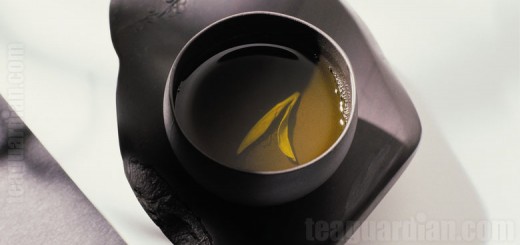
Uji Gyokuro, Classic Representation of Japanese Green Tea
buying guide
Automated steamed green tea production has been so uniformed in Japan that it is difficult for the untrained to distinguish a fine sencha, a kabuse-cha and a gyokuro. As a matter of fact, kabuse-cha used to be marketed as gyokuro. It is still practiced in some teashops in Japan and many outside of Japan.
-

- Uji Gyokuro 宇治玉露 of a very fine quality “Purple Cloud” grade, a classic representation of premium Japanese steamed green tea.
-
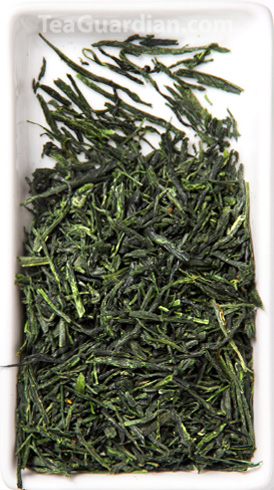
- Marketed as gyokuro in a prestigious looking and modern teashop with a number of branch stores in cities in China. Notice the glossy surface and much less intense green colour and a different shade of green. Until examined by the trained eye and tasted by the trained palate, this could very well pass for the real thing.
-
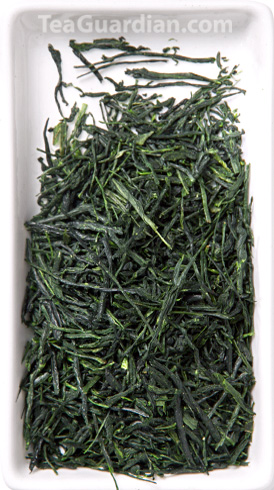
- Uji Sencha 宇治煎茶, this is a fancy grade of the famous steamed green tea
-
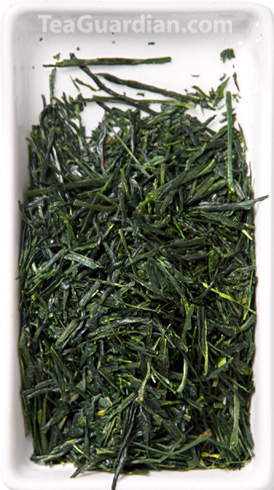
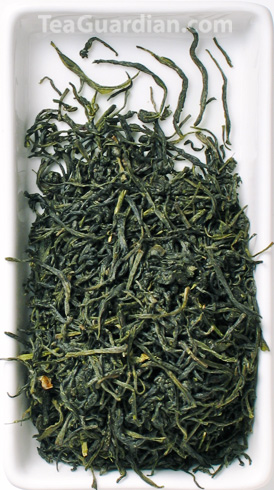
- This steamed version of Emei Maofeng 峨眉毛峰 is a re-constructed traditional style. Its taste is entirely different from gyokuro: clean, fresh and brisk. It is not as intensely coloured, but its whole-leafness is an attraction that works for me. I think it is a great alternative for those who want steamed green tea but not quite fond of the kind of taste the Japanese group offer.
quality is the only label
For me, it is not the label that counts. It is the quality. This tea variety definition by such tiny variations as how much longer the sun-block duration etc is a weak one. It seems to me more like a grading system rather than a variety system. I will explain why.
The warm and delicious aroma of a really fine gyokuro that is a first flush can still be traced in a freshly produced fine sencha or kabuse-cha, although much weaker. A leaf of fine gyokuro is much more delicately rolled than the usually flattened kabuse-cha. The former is usually from a first flush for more intense aroma and taste and therefore, slightly lighter, but more intensely green. However, they are from similar bushes, similar growing environment and nearly identical production process, other than the fine tuning of a few parameters. To me, that means a same variety of tea, only different quality levels.(6)
do more tasting
Therefore, to make sure you get your dollar’s worth of tea quality, always cross check your gyokuro for taste and aroma supremacy over a kabuse- or a sen-cha, and always cross reference different sources. If you are not sensitive enough to tell the difference, or there is not much of a difference, then maybe it is a wise choice to go for a better value than a better name, for until you find the difference. That is the case for personal use.
When using tea as a gift, however, the grade name, the origin, the brand, and the packaging, as always, mean equally as much as, if not more than, the content. More so for those who know about them, and even more for the Far East Asian.