Red Jade, The Fragrance of Taiwan
-

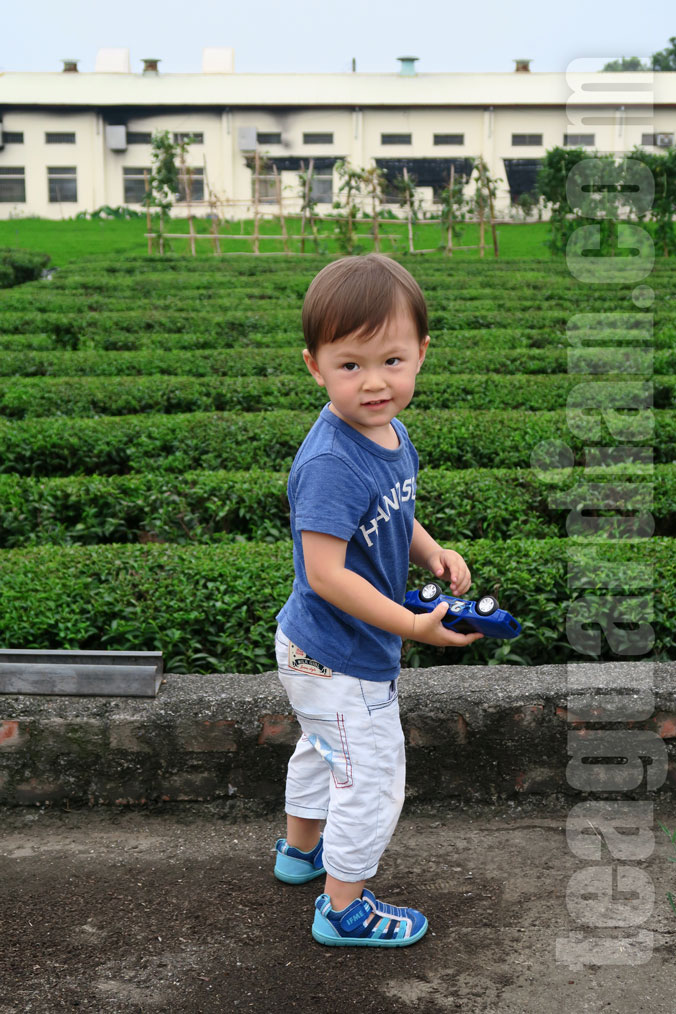
- The tea farmer’s boy standing in front of a small field of Red Jade cultivars
-
- The tea cultivar for producing Red Jade black tea — Hong Yu — is a unique looking one that reflects the wild nature of its ancestry

-
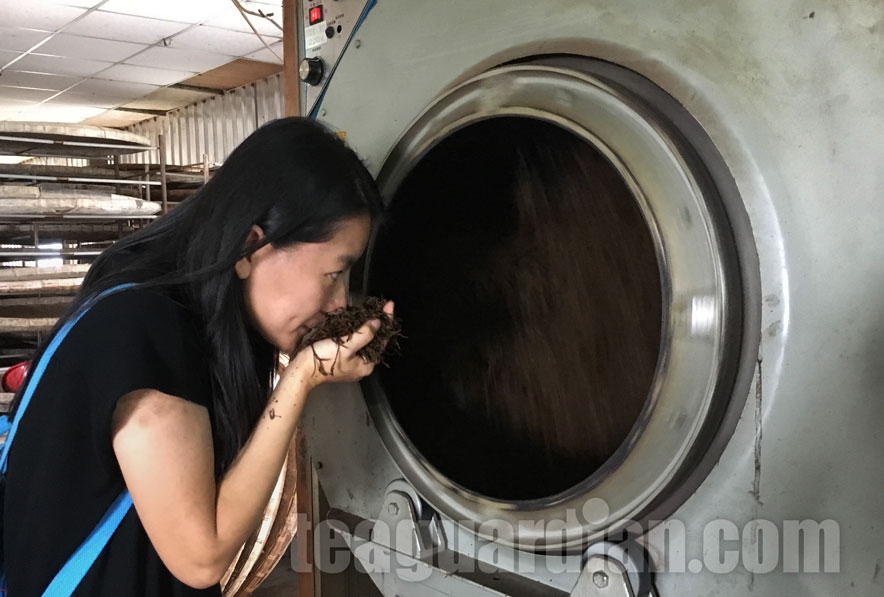
- As the rolled leaves are being unentangled in the drum, our farmer checks the progress of oxidation by smell
-
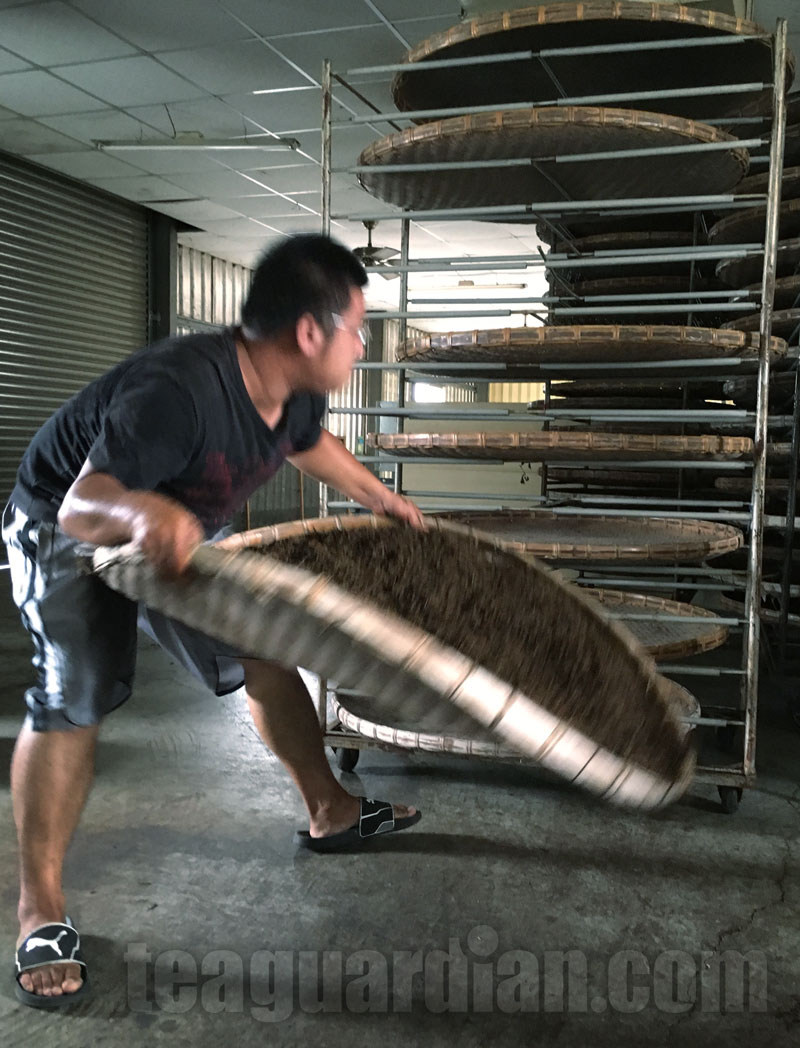
- The tealeaves are laid in a particular thickness and looseness in a basket before stacking onto a rack to push into the fermentation chamber.
-
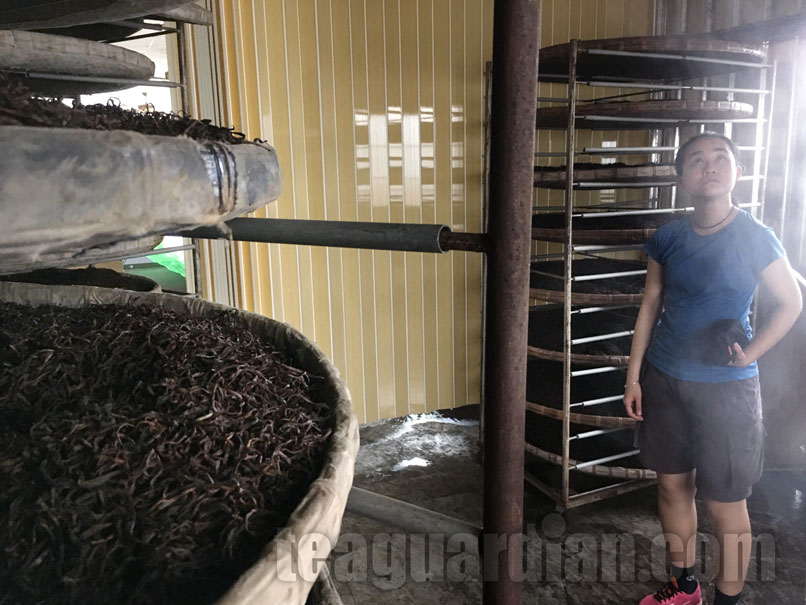
- Climate control during the long hours of oxidation ( fermentation ) of the tealeaves is key to the gastronomic quality of the product
-
- Besides reading off instruments for monitoring oxidation progress, the leaves are periodically tasted for fine-tuning the conditions in the fermentation chamber
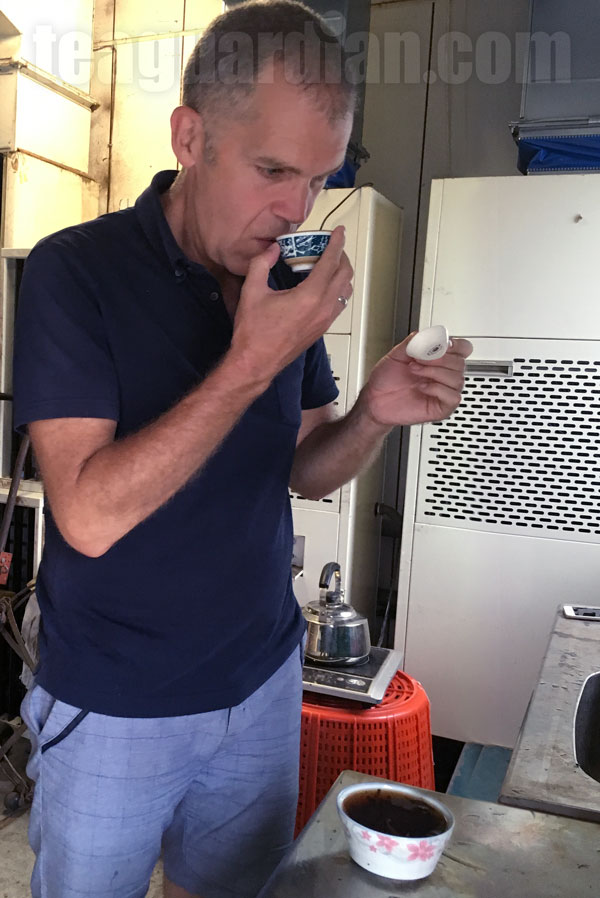
I would have continued to ignore this tea had it not been the surprising tasting experience of the last sample. It was similarly bold as a Ceylon, spicy as a Darjeeling, malty as an Assam, and full-bodied as a Keemun. Yet not in the same way. Its profile is entirely different from any of the black teas from China or other regions in South Asia. This is Red Jade, an intensely ruby colour infusion that my farmer proudly call the Fragrance of Taiwan.
So I decided to find out more about this “Ruby” black tea.(1)
Before mid-19th century when immigrants from Mainland China brought with them their tea plants and production techniques, the indigenous tribes in Taiwan had already had a history of making tea from local wild tea bushes.
In October 2009, three scholars published an important finding about these plants. DNA sequencing proved that they are a Camellia of a different species than Camellia sinensis.(2)
There are many species of Camellia, many of which are not meant for producing the drink that we are familiar with. The one that does is Camellia sinensis — i.e. Thea of China. Two main varieties, Camellia sinensis variety sinensis, and Camellia sinensis variety assamica, manifest themselves as hundreds of different cultivars in tea fields large and small all over the world.
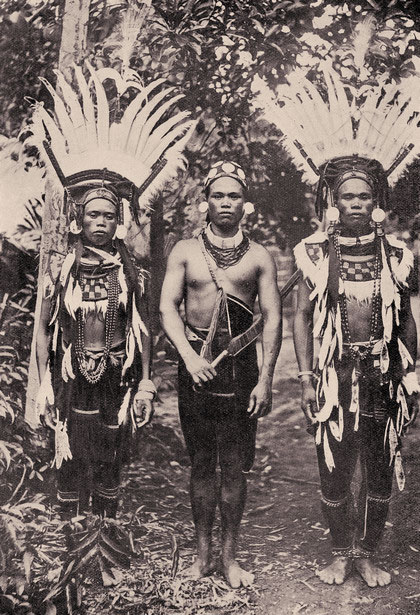
There are a number of tribes of indigenous people in Taiwan. Amis is one of the largest. Photo circa 1900, photographer unknown
Leaves from Camellia formonensis — Thea of Formosa — is drinkable too. Officers from the Qing court documented the local tea as early as 1717, and the Dutch even earlier in 1645.(3) They had no idea that it was a different species from that of China. Plant taxonomy was yet to be developed anyway. This original plant, however, is far less well-known than its offspring on crossing with a cultivar of the sinensis species from Burma.
TRES#18 (4) sports intensely red branches and thick, leathery leaves. The hybrid was developed in a research farm in Nantou, under Taiwan’s agricultural department in 1999. On top of the cold code name TRES#18, they call it Hong Yu — red colour jade. When the leaves were processed into a black tea, the new cultivar’s destiny was fixated. I guess even the plant breeders themselves were surprised too.
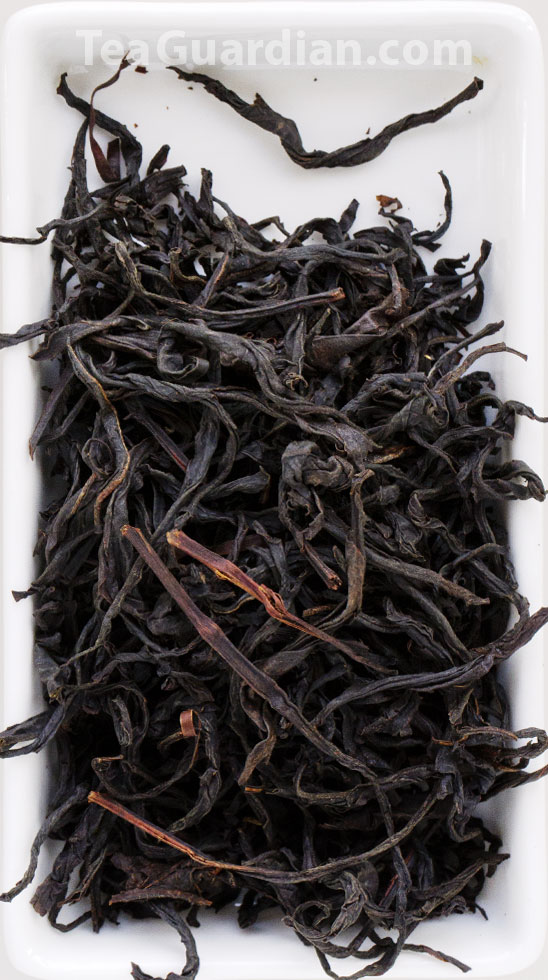
The Fragrance of Taiwan, Red Jade — Hong Yu black tea produced from TRES cultivar #18 in a highly specialised traditional gongf black production process
However, botany is only half the job. Since the end of the last century, tea farmers in Nantou, particularly those around Yuchi ( 魚池 [ Fish Pond ]), where the cultivar was born, have been trying out different modifications of the traditional gongfu black tea production process to best manifest the potential of the leaves.
As far as I know, all Red Jade producers are small family farms producing in small batches. What they don’t have in economy of scale is the ability to adjust in very fine details the processing according to the changing conditions of each harvest. There is also no pressure to maximise production to cover a huge overhead that always comes with scale. Value for quality is the best evidence for such traditional farming.
This many years of fine tuning the borrowed gongfu black tea processing technique from Fujian allows these Nantou farmers to develop a process quite specialised for Red Jade. Not only do they fine tune the laid thickness, humidity, temperature and timing during oxidation, but also during withering. Their gongfu black tea production workflow is therefore more intricate than that in Fujian, not to mention those in other black tea regions.
Although the processing is traditional, the aids they use in the process are not. Taiwan produces its own small machines for rolling, for roasting and for baking, in addition to small apparatuses for environment monitoring and conditioning. The small facility that produced the fantastic quality I sampled was operated by just one man when I visited with his farmer boss. The most reliable and youngest Red Jade master in these villages here, his boss told me.
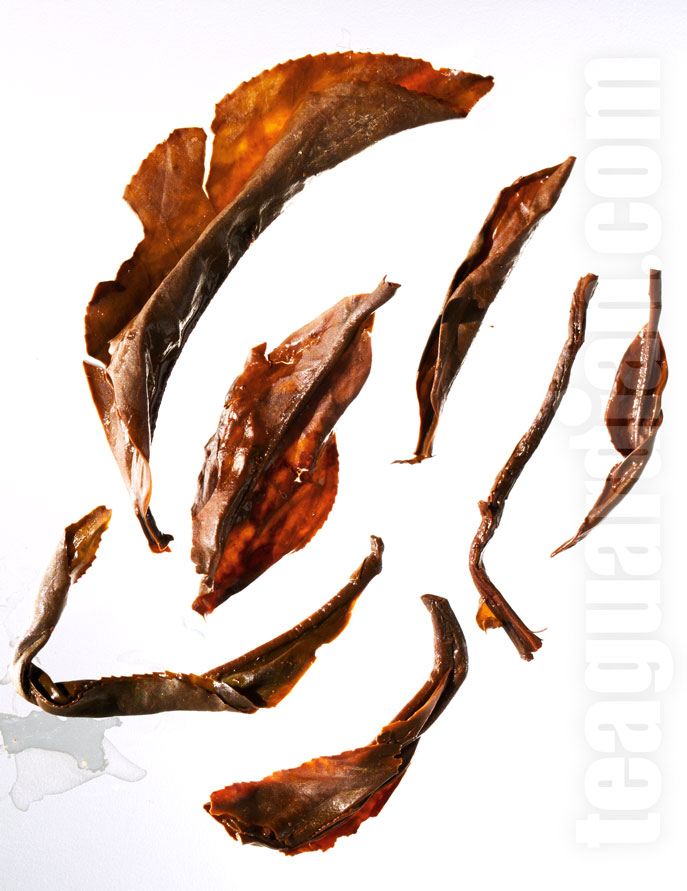
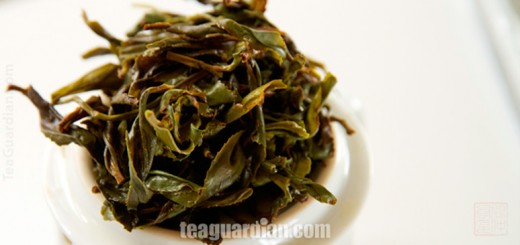
Infused leaves of Red Jade reveals the evenness and thoroughness of oxidation and the freshness of the tea
Few black tea this thoroughly oxidised and baked as Red Jade hold same pitch of floral aroma. Somehow this half wild tea does. While most people in Taiwan use plenty of leaves in short infusions to maximise this olfactory experience, I’d rather prefer the 2 to 100 ratio in 5 minute standard. The bitterness that comes with this provides a backbone and enhancement to all the complex floral, herbal, cereal and spicy tones to work together for a minty and full flavour tea that none others can hardly match.
The Fragrance of Taiwan does carry multiple layers of meanings for what is some black colour twisted dried leaves. The very essence of the Taiwan tea industry is hidden in there.
Before this batch that I have now, samples of the same variety had been sent to my office a few times a year, all failing to interest me. Only young leaves after September in Nantou have the potential for the full profile. In addition to Nature, the artistry in processing is critically decisive.