Bouquet Style Phoenix Oolongs

-

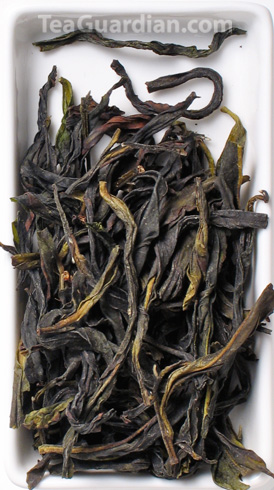
- Baxian Dancong, aka the Eight Immortals, is a traditional Phoenix shuixian oolong in light baking, i.e bouquet, or qingxiang, style. 鳳凰八仙單欉
-
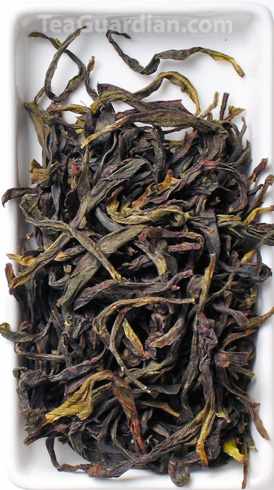
- Song Cultivar Huangzhi Xiang Dancong used to be the most popular and acclaimed of all classic style Phoenix dancongs. Yet most producers now process it to the bouquet finish to highlight its kumquat accents.
-
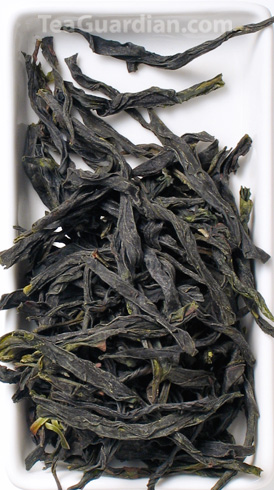
- Lanhua Xiang Dancong 蘭花香單欉, bouquet style Phoenix oolong
-
- Zhilan Xiang Dancong 芝蘭香單欉, Phoenix oolong
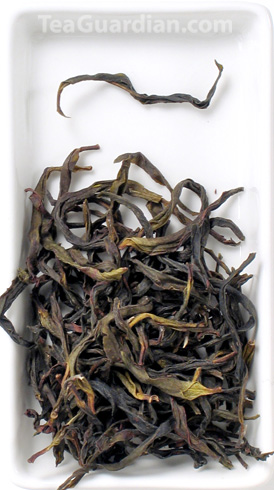
Qingxiang Fenghuang Dancong ( qīng•xiāng fèng•huáng dān•cōng ) 清香鳳凰單欉 — literally clear fragrance Phoenix single bush — aka bouquet style Phoenix oolongs, floral style Phoenix “single bush” oolongs, etc
as if it were fragrant blossoms
I do not personally like strong flowery aroma in my tea except only for that of Phoenix. This intrinsic fragrance, varied from one variety to another, is entirely different from any additives, natural or artificial, added to some other teas. It comes innately from the biochemistry of the tea leaves when its many components interact with one another during production processing. The bouquet of a properly produced qingxiang Fenghuang Dancong maybe strong or subtle, but it is always clean. It conveys a strong sense of purity. Purity is the essence of tea to me.
When you open an air-sealed pack of such tea, the bouquet simply rushes at you, as if there really were a bunch of fragrant blossoms in there. The aroma has a distinct clarity that is akin to certain wild Chinese orchids. That is why a lot of the names of the tea varieties have orchid names. The Chinese character for orchid is romanized as “Lan” ( Chinese: 蘭 ), as you can see in many of the Phoenix names. It can also be associated with the pure, sweet aroma of the popular Chinese sacred lily (1) — Shuixian ( 水仙 ). That is why the main group of cultivars is called by that name (2).
A fine one can infuse to a silky texture with a crisp clarity, a complex full fruity body accented with light bitterness and a clean, sweet aftertaste. And the bouquet is always there, even in the aftertaste.
There are two main harvests for fine bouquet style Dancongs: spring and winter. Spring ones are always fuller body, better balanced and longer taste. The finest ones are always from bushes plucked just once in spring. Compared to the spring harvest of the same variety from the same farm, a xue pian ( Chinese: 雪片 i.e. a snow flake, which is a special name for winter harvest Phoenix ) is often clearly more aromatic but relatively shorter and more bitter. Some people like it that way, though.
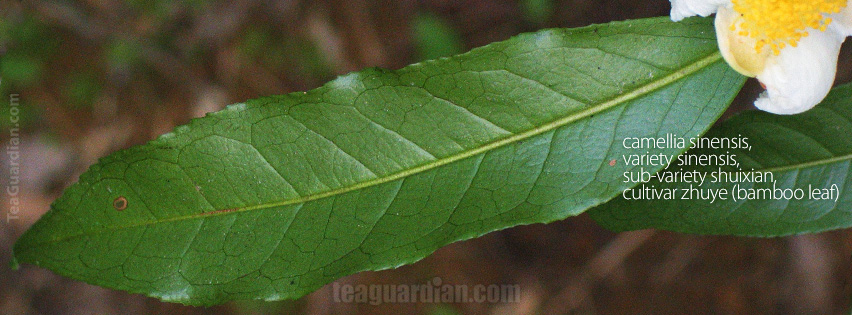
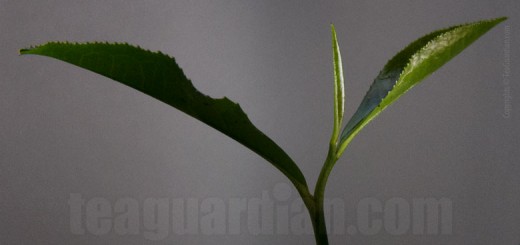
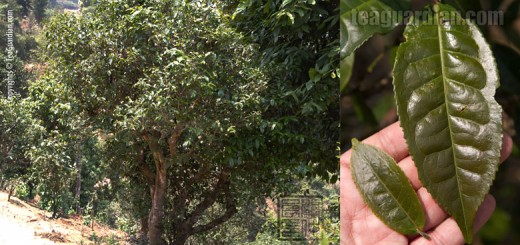
The tea plant that makes one of the rare bouquet style Phoenix oolong, Zhuye Dancong: camellia sinensis, variety sinensis, sub-variety shuixian, cultivar zhuye
tasting note
To maximize the enjoyment of the aroma, use more tea and shorter infusion time. I normally have it 5 to 7 grams to 150 ml water for 30 seconds in the first round, but that really is dependent on the quality of the particular selection.
If it is a really fine selection, I may infuse for longer time with a tiny bit less tea, so I can maximize the taste as well.
A clean air environment helps a lot too.
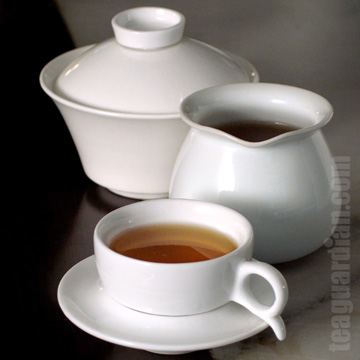
The gaiwan and smaller teacup are helpful in making and drinking tea with a lot of leaves quickly and enjoyably.
health note
As mentioned in the health notes in the health notes about Phoenix oolongs, bouquet style dancongs are especially effective in reinforcing the body immune against respiratory infections. However, they are a lot colder in TCM term than classic style ones. Therefore if you have a TCM cold body foundation or condition, use a classic style instead. Xue pians are even colder than spring ones, so if you really need a chill, you know what to look for.
When you use a Phoenix oolong to help fight against respiratory infections, use more tealeaves and short infusions, such as 6 g for 20 seconds, in 150 ml water. Drink continuously, in small sips, for 300 ~ 500 ml.
As mentioned in the linked article, this is not based on any scientific findings nor TCM rules, but rather our empirical experience and that of our customers. Why this group of oolong varieties does it better, I have only unproven theories. I hope some people in the medical or scientific field could make proper studies of this.
storage note
Some selections of bouquet style Phoenix oolongs are purposefully lesser-baked for maximum fragrance, and therefore they may have a higher moisture content than the standard for tea drying. Such selections can be stored in room temperature at best for 6 months. The aroma depreciates upon longer storage. It stays much better in the fridge, and depending on the dryness of the leaves, most can last two years. Make sure of air-tightness.
Finer ones are always properly dried in low fire for good shelf-life in room temperature. However, that means the aroma would still gradually depreciate and transform into other virtues of the tea. Respectable qualities matured for 3 years would still release impressive fragrance upon contact with hot water. Some can be stored and mature really well. Others are re-baked after a year if they are still not consumed. The tea takes on an entirely different profile afterwards. However, this is a highly skilled art and I have seen many confident dealers doing it very poorly. I advise either consuming the tea within a year or putting into the fridge the amount you won’t consumed readily, if you are not sure the quality you are getting.