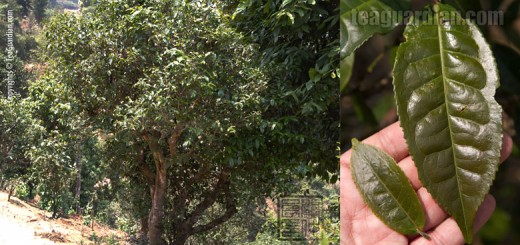
Mengding Ganlu, Sichuan’s Finest
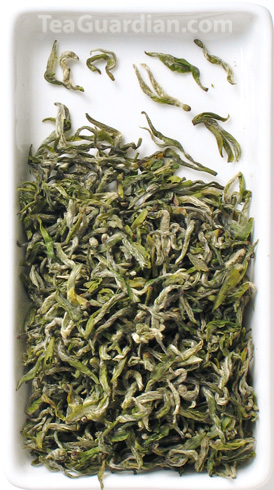
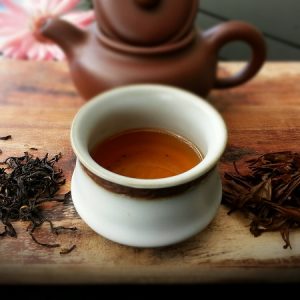
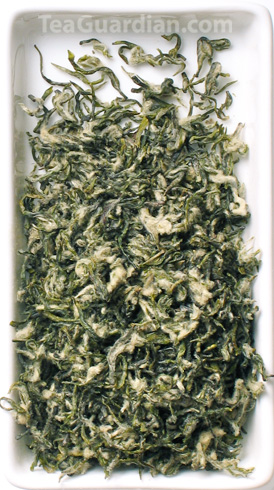
Mengding Ganlu: This is a fine first flush produced in a farm specialised in fine quality. Notice how it is more yellow than other green teas produced using similar methods.
méng•dǐng gān•lù 蒙頂甘露
origin: Mengshan, Sichuan
orientation
This is a lesser known, but finest green tea. It is one of the very few green teas that I personally have a liking of.
A good one is always hand-roasted, curly with a high proportion of downy shoots and tiny young leaves. Mengding Ganlu is a most full body green tea with good sharpness and depth, and yet the overall impression is smooth and delicate. Fine, clean, orchid aroma with a sweet fruity accent. Mellow liquor with silky texture. Fine sweet aftertaste. Highly recommended.
origin
The mountainous, misty country of the Sichuan province sprinkles the history of China with records of tea for thousands of years, amongst heroes, poets, warlords, politicians, mysteries, adventures and material richness. People debate whether tea, as an agricultural product, originated from this place or the neighbouring province of Yunnan. However, it most certainly is the first province with locations officiated for imperial tea reserves.
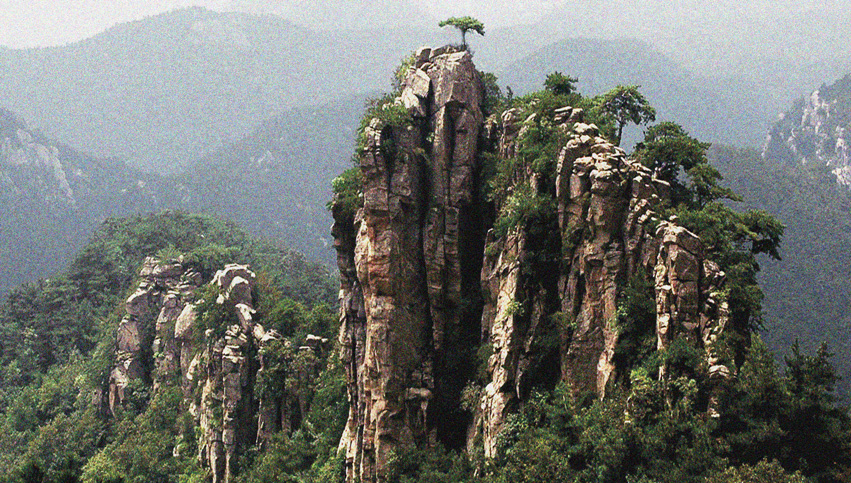
Mengshan, Sichuan
110 km west of the capital Chengdu, the 1400 m summits of Mengding (aka Mengding Shan, Mengshan) are only dwarfs standing immediately east of the mountains of the Himalayas. The county of Ya-an, where Mengding resides, is like a smaller basin west of the Sichuan Basin, and at the eastern edge of the world’s tallest and largest mountain range.
The geographic location gives this area its microclimate — even mistier, lesser sun than the misty province itself, and yet cooler because of the altitude and taller mountains on the south — perfect for slow-grow tea. The tea bushes here, especially those at higher top, are never nearly half a meter tall, and the leaves tiny.
Mengding Mountain is one of the earlier tribunal tea areas, dating back to the Tang Dynasty (618~907 A.D.) and continued to be imperially appointed through later dynasties. Like many other production areas, it benefited from the policy of employing loose tea as the national tea form to had come up with its own processing style in the 16th century.
The production process still used today reflects that history — an intricate cross-stepping of the ancient baking technique with the 16th-century-trendy wok roasted technique. The delicate hand work and micro steps couple with the unique pluck quality to have yielded the delicately incredible taste of this green tea.
production notes
Finer batches are made always in early Spring, between early to mid-March and processed immediately after plucking, like all other fine teas.
The fresher tea character is a result of the complex process — the leaves are roasted in the wok four times with curling and kneading in between before subjecting to a final baking. The curling and kneading give the tealeaves its appearance and break some of the leaf tissue so the subsequent low heating converts the leaked juice into aromatic substances. Not only do these artisans highly skilled in manipulating the tiny leaves, but they have to know quite preciously what they are doing in controlling the gradually lowering heat to maintain the fresh and clean taste while having to dry them. All with the bare hand on the big metal wok!
-

- Mengding Ganlu 蒙頂甘露, a rare green tea from Mengshan, Sichuan 20517 | 8792
-
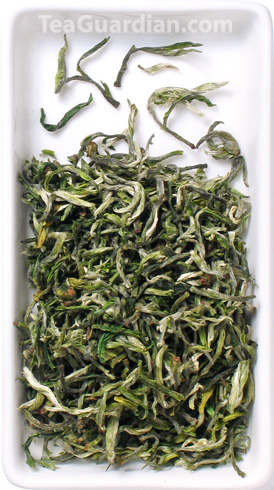
- Jingshan Cha 徑山茶, a rare and less well-known premium green tea from the Zhejiang region. 20536 | 8760
-
- Biluo Chun, aka Spring Snail 碧螺春 is most well-known green tea from Jiangsu 20614 | 8956
-
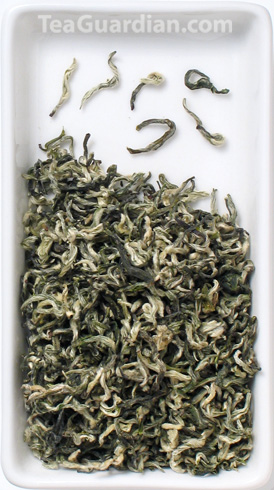
- Biluo Chun, 碧螺春 green tea, Minbei 閩北 ( i.e. Northern Fujian) version. 20534 | 8750
tasting notes
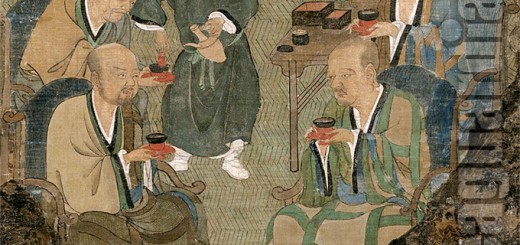
Despite the extremely spicy hot diets of the local population — children have raw chili peppers by the pod to chow down noodle with for their afternoon snacks — the overall sensation of tea produced here is fine and mellow. However, do not waste the finesse of this tea by coupling it with strong tasting food. This tea goes well with sweets, such as cakes and chocolates, but is very nice as is. This reflects well its tradition as a monk’s tea used in meditation and during intellectual activities.
Beware: there are selections out there with strong nutty aroma and strong, short taste. They are not a representation of this label.