Tea List Gallery: Black Tea
Black tea (aka red tea) is produced from the most extensive geographic areas and we shall include only varieties where fine qualities can be found. This gallery aims at showcasing visually the range of this tea category. More will be added as we review more varieties.
detail reviews
Many of the tea varieties in this list have appeared in review posts in this site. You can reach the particular writing by going to the category menu above this post. Most of the times one piece of writing may include a few of the teas listed below for comparative study. You may also do a site search to find out more about a particular tea and where it is mentioned.
When a tea is not mentioned in an existing writing yet, it will be in the near future. Click <here> to register for updates. You may also consider joining us at the Questions and Answers section to discuss about a tea. To read about the nature of black tea, click <here>.
-

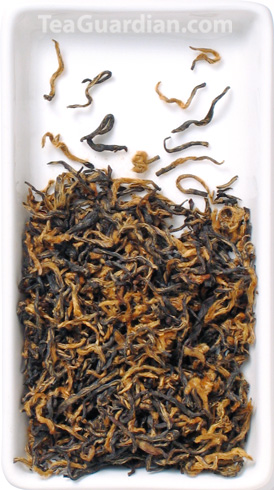
- Jin Jun Mei, aka Golden Stallion 金駿眉, a black tea style developed in the 2000’s in the Wuyi area and its vicinity. This tea also employs the xiaozhong cultivar. 20535 | 8757
-
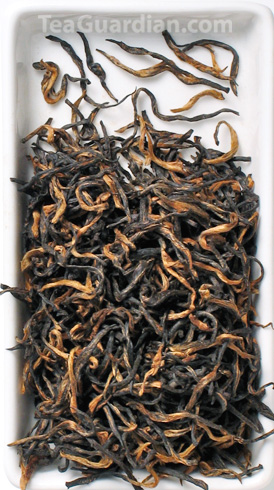
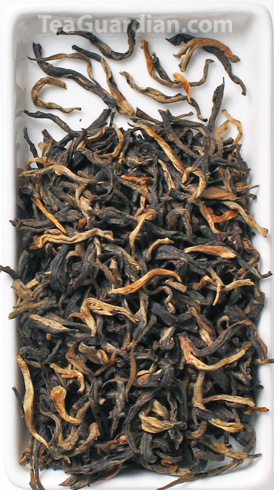
- Dianhong black tea 滇紅 20273
-
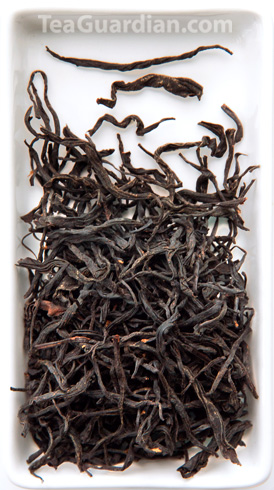
- Golden Tieguanyin Black Tea, aka Jinguanyin 金觀音紅茶 This is a new variety of gongfu black tea produced from a new cultivar that is a cross between traditional oolong bushes and black tea ones.
-
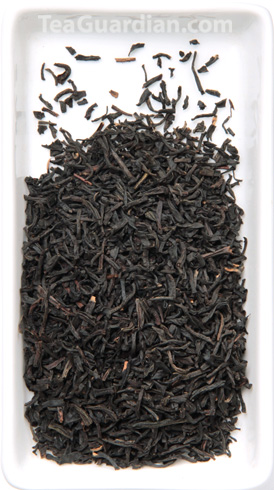
- Lapsang Souchong, smoked version. 松煙正山小種 A machine made black tea that is smoked and is generally known as Lapsang Souchong
-
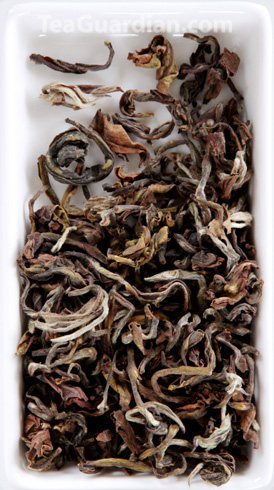
- Semi-oxidized black tea from the Himalayas. Marketed earlier as Himalayan “oolong”, This is actually a short oxidation black tea. The residual enzymes give the tea a special zing, which I find even more enjoyable then the traditional black
-
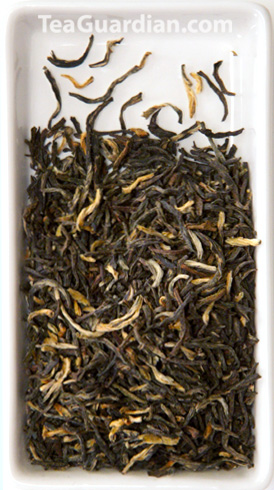
- A mass market orthodox grade ( SFTGFOP ) can be as good as any similar grade Darjeeling but much more reasonable in price
-
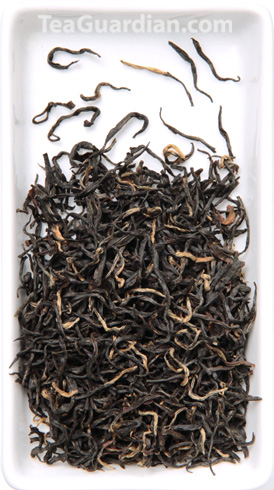
- Lapsang Souchong, aka Zhengshan Xiaozhong 內山小種 or 正山小種 from Xing Cun 星村, the origin, in traditional gongfu black tea style, and non-smoked, using both the xiaozhong cultivar and the xiaozhong processing technique
-
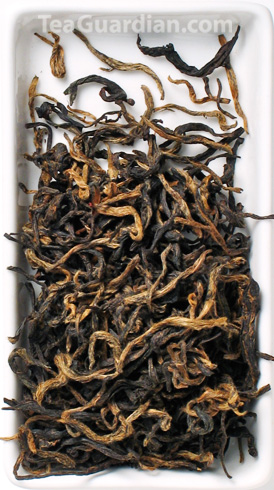
- Bailin Gongfu: To the east of Zhenghe where Bai Mudan is made with the cultivar Fuding Dai’bai, a counterpart of Zhenghe Dai’bai, Bailin Gongfu is made. The taste is a little more floral, but shorter, and the body not as round. The appearance can be rather similar. This particular selection in the photo is a special grade 3, one step above grade 1. Notice the typical large and unwieldy tips.
-
- Easily mixed up with the original Lapsang Souchong, this one is from Bailin, using also the xiaozhong technique but a local xiaozhong cultivar 白琳小種工夫紅茶
-
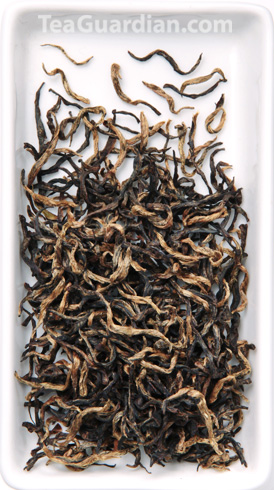
- Traditional hand-rolled black tea from Nepal
-
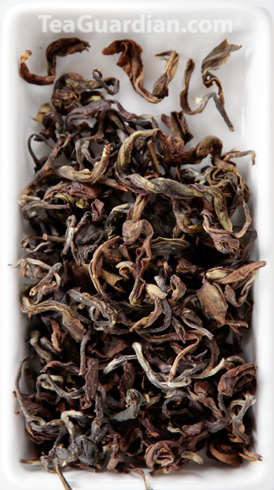
- Keemun (properly Qimen) black tea, machine-made, Orange Pekoe
-
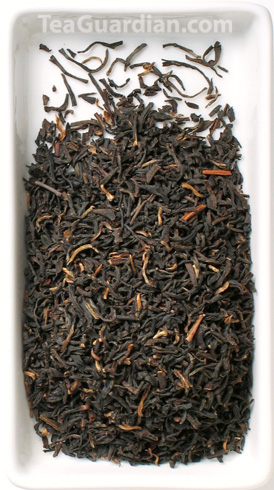
- Semi-black White 加揉白牡丹 from Fuding Fujian, as inspired by Taiwan’s “Dongfang Meiren”
-
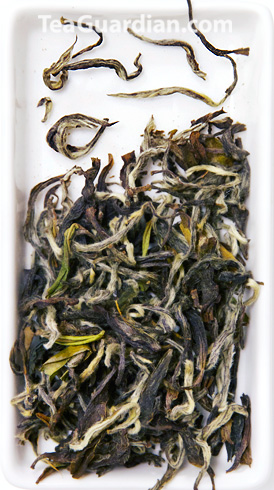
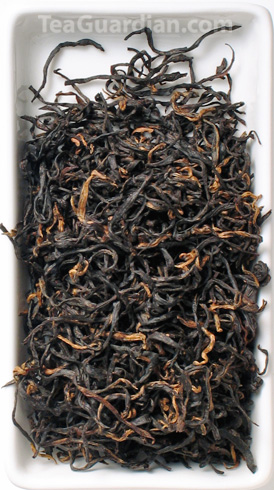
- Qimen (Keemun) Gongfu Black Tea, aka Qimen Hong Maofeng 祁門紅毛峰. This is what made the name Keemun famous for black tea in the beginning, before CTC machines were introduced to make commercial grades. 20575 | 8926
-
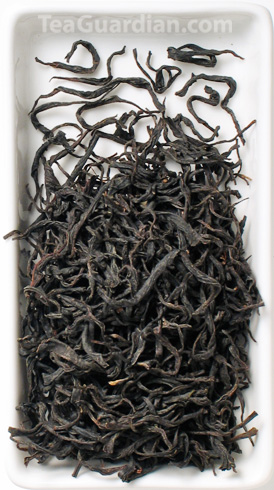
- Jiu Qu Hong Mei, aka Red Plum Classic, or Longjing black tea. 20612 | 8921
-
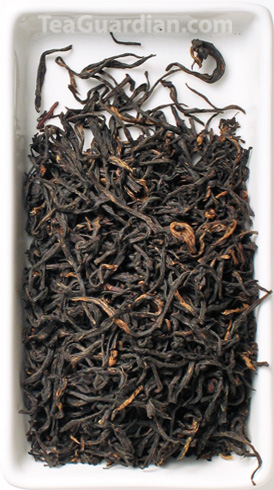
- Tangyang Gongfu: To the west of Zhenghe and all the way to, and including Wuyi, are numerous regions that were some of the first production bases for export teas. Tanyang Gongfu is produced here with cultivars totally different from the Dai’bai strands. The traditional Xiaozhong strands produce teas that are smooth, quite long and tinkling. Newer cultivars that are introduced from Yunnan, that is, strands from the Camellia assamica variety, produce teas that are stronger but less complex in taste. Perhaps for productivity reasons, the latter is now a lot more popularly used for producing Tanyang Gongfu. This selection here is a grade 2, and more than a year old. Newer ones looks glossier and taste freshers too.
-
- Zhenghe Gongfu, having the roundest and longest body in terms of taste, is made with the same cultivar for the white tea Zhenghe Bai Mudan (aka Zhenghe White Peony), which is also reputable for its body. Finer selections consists usually of a high percentage of pekoe, giving the black tea a golden appearance. The larger, softer leaves also distinguishes its look, but it is not to be mistaken as Dianhongs (aka Yunnan blacks), which leaves are coarser and harder, and tastes differently. This selection in the photo is of a special grade 1, with quite a lot of golden tips and optimum fire finish. Notice that both the leaves and the tips are tightly twisted and there is a slight glossiness to them. These characters differentiate zhenghe’s apperance from that of Dianhong.