Huangshan Maofeng, High Fire Style Green Tea
-

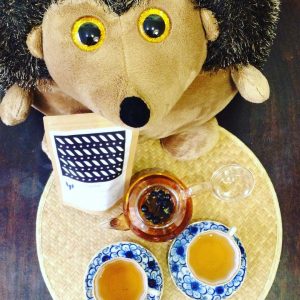
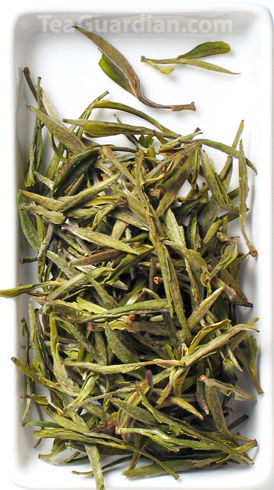
- Huangshan Maofeng 黄山毛峰, original style, premium quality. This is perhaps the most famous baked green tea. Notice that it is more yellow than some other green tea.
-
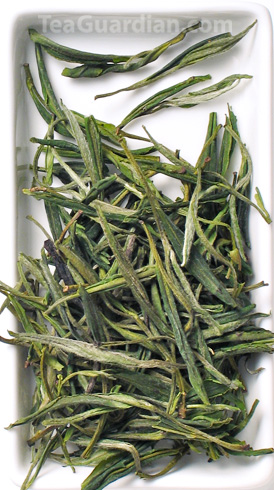
- Huangshan Maofeng 黄山毛峰 This famous green tea from the Huangshan area is available in many qualities and grade. This is a grade 2, green version. Green version have come about in the recent decade to satisfy the market’s expectation of a greener green tea.
-
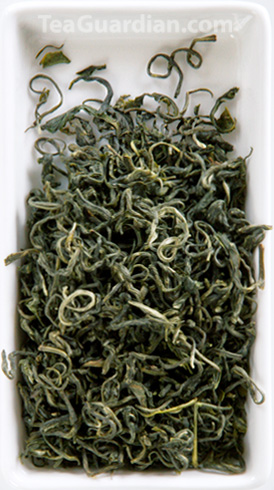
- Yunwu 雲霧, an affordable machine roasted whole leaf green tea produced in many regions in China. This same tea (and many others) has been seen marketed in any famous green tea name: Huangshan Maofeng, Biluo Chun, etc.
huáng•shān máo•fēng 黄山毛峰
region: Anhui, China
This is a name used by a huge range of green teas produced in the Huangshan area. Most are produced using a simplified and modern baking process. They look green and the taste is easily understandable. The genuine and finer ones are sweet and very slightly tangy, with a hint of charcoal and yet clean and delightful. Floral, sweet aftertaste.
origin
Monks in the area around the scenic and mystic Huangshan (Yellow Mountains) in Anhui Province had been producing a “Yunwu (translate: cloud and mist)” tea since the 16th century without much market attention. It was in 1875 that a tea merchant who was also a local grower developed a “secret” formula to improve on the original making method in order to compete for export and wholesale business that this tea was created. Mr Xie Zheng-an’s secret is now the authentic traditional production process for teas bearing that name. As for the original Yunwu, it has become the name of a premium grade of Huangshan Maofeng.
tasting notes
A good Maofeng would be scalded with water that is over 90°C. The infusion effect can vary from light and easy to full-bodied, dense and memorable. I recommend using 85°C when you aim at a lighter, quicker brew and 80°C for a stronger, longer one. Naturally, use more leaves and a smaller pot, such as a 130 ml gaiwan for the latter. Be reminded to pre-heat the pot thoroughly.
A good Huangshan Maofeng should be sweet and very slightly tangy, with a hint of charcoal (old style production always sticks to wood charcoal in production), and yet clean and delightful. The sweetness of a fine one stays on at the throat with a distinctive floral over tone.
buying tips
Quite a number of tea bush varieties are used today in the Huangshan area. Different raw materials give different characters. Nine, or I suspect even more, varieties are used in both green and black tea production (it’s the same area as Keemun Black Tea). Variations in production technique, choice of fuel and type of machinery yield products that may be same grade, but totally different in taste, aroma and even appearance. I shall give more details in later writing; please do your tasting and experiment with different suppliers until you find one that is reliable in both quality and price.