Quality Basics 3: The Myths of Grades
-

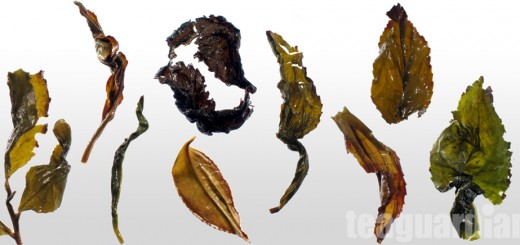
- infused leaves: commercial grade smoked Lapsang Souchong 松煙正山小種 Comparing the infused tealeaves of a traditional Lapsang Souchong, a smoked Lapsang Souchong, and a Bailin gongfu black tea made in the xioazhong style
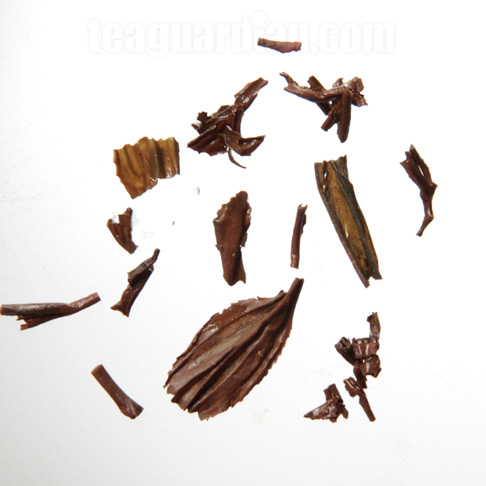
-
- infused leaves: Bailin Xiaozhong 白琳小種 Comparing the infused tealeaves of a traditional Lapsang Souchong, a smoked Lapsang Souchong, and a Bailin gongfu black tea made in the xioazhong style
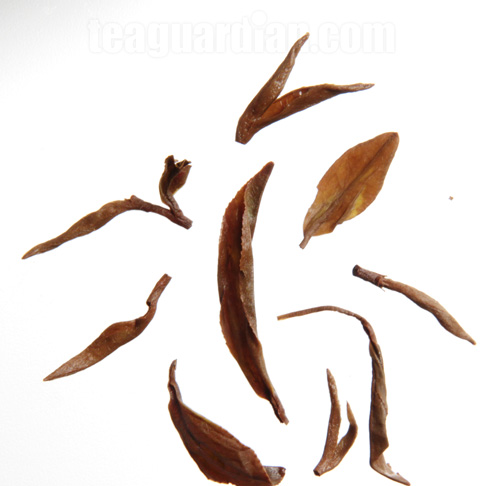
quality grades
There is a Western grading system given to conventional black tea productions basing on the appearance of the tealeaves. It is practiced by all commercial black tea traders in the world as a form of quality standard.
The label Orange Pekoe as seen in the supermarket tea tin is the name of one of the usual grades. It, by all means, has nothing to do with the fruit.
There are many theories as to how the name came about, but all understand that the word Pekoe is a deteriorated transliteration of the Amoy (3) dialect for “white downy shoots” (4), that describes the young leaf buds in the tea plant. The density of “pekoes” in a batch of tea has been used as a quality indicator. One theory of the origin of the name is that when the white pekoes, together with other leaves, are processed to make black tea, they turn to an orange red. Sadly the term now basically refers to a basic grade in black tea that neither has any orange colour in the dried leaves, nor obvious pekoe content.
-
- Keemun (properly Qimen) black tea, machine-made, Orange Pekoe
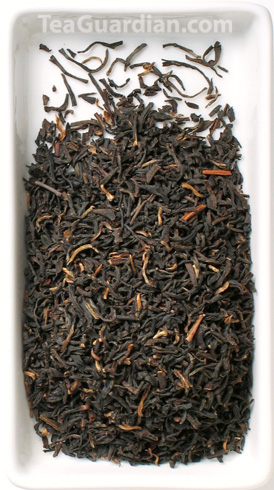
-
- Qimen (Keemun) Gongfu Black Tea, aka Qimen Hong Maofeng 祁門紅毛峰. This is what made the name Keemun famous for black tea in the beginning, before CTC machines were introduced to make commercial grades. 20575 | 8926
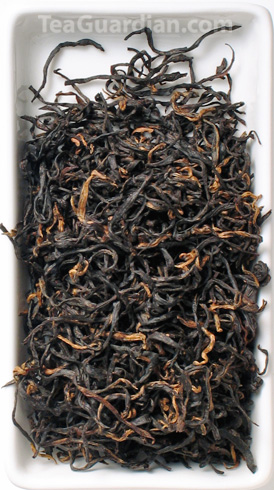
-
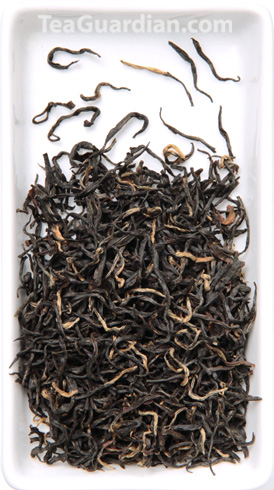
- Lapsang Souchong, aka Zhengshan Xiaozhong 內山小種 or 正山小種 from Xing Cun 星村, the origin, in traditional gongfu black tea style, and non-smoked, using both the xiaozhong cultivar and the xiaozhong processing technique
-
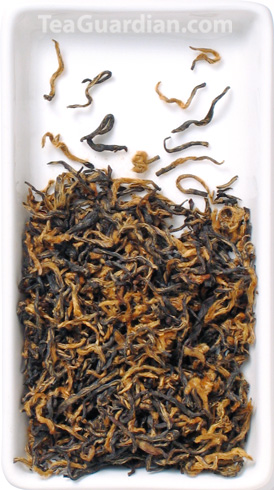
- Jin Jun Mei, aka Golden Stallion 金駿眉, a black tea style developed in the 2000’s in the Wuyi area and its vicinity. This tea also employs the xiaozhong cultivar. 20535 | 8757
Western black tea grading
In the tradition of European managed black tea production, machined or manual, products are graded with the following grades for a certain standard comprehension of quality. This is referred to as “orthodox” to contrast with later invented, quicker and more industrialised black tea productions.
Basic “Orthodox” grades
- OP – Orange Pekoe
- Main grade in tea production. However, most productions which are machine cut ( therefore, not really orthodox ) are labeled with this grade. We think this is very misleading
- FOP – Flowery Orange Pekoe
- Grown leaves with few tippy young leaves
- GFOP – Golden Flowery Orange Pekoe
- Somewhat more tippy leaves than FOP, sometimes one can find real whole leaves in certain productions
- TGFOP – Tippy Golden Flowery Orange Pekoe
- Less rough leaves than GFOP, some productions are whole-leaves
- FTGFOP – Finest Tippy Golden Flowery Orange Pekoe
- The best grade in mass produced black teas. Often a tea plantation uses this to showcase their quality. Sometimes a numeral 1 is added to the end of this label to indicate a best grade
- SFTGFOP – Super Finest Tippy Golden Flowery Orange Pekoe
- Some people say the S stands for “special”, but either way this is the highest grade in the Orange grading system
There are also grade names for broken grades and CTC products, such as BOP, “fannings” and “dustings” etc. The alphabet “B” is used in the same logic as the above system for broken grades. Let’s deal with that in another article.
grading: meaning and limitations
Another commonly seen grade is FOP — Flowery Orange Pekoe. There are two major different opinions as to what the word “flowery” refers to. It describes the aroma of the tea, as the word is used in wine, one saying goes. However, there are not that many black tea defined by this grade that I personally can experience that bouquet sensation. The Chinese version of the word, “hua”, however, has been used to describe the pluck and the shape of the produced tealeaves since antiquity. In fact, the Chinese names for some teas with reputation refer to the blossom, because of the appearance, e.g. Bai Mudan — White Peony. The reason is obvious — a pluck of the young shoot together with two leaves, i.e. a standard pluck in most regions, does look like a flower. It is logical to believe that with so many borrowed terms from the Chinese origin, “flowery” is just another one in a grading system that many still argue about its originality.
In fact, the names of all the other grades in this system refer solely to the appearance of the product, rather than taste quality (see side bar). Such is a demonstration of the linear thinking of the people who set up the system. Whether this system was one factor that is responsible for, over the years since the manufacturing mode took over much of tea producing, reducing tea to a standardizable product is open to debate. It has certainly not been universal for tea. Buyers have always been relying on professional tasting to decide for a stock rather than just the look. All seasoned people in the trade understand that the FTGFOP#1 from one producer/estate is worth a lot more than the same label from another.
The system, however widely it is used in the world of mass-produced black tea, has never been able to describe anything outside of it.
Other numbering and alphabet systems exist in different regions and different tea varieties, mostly for tea of mass-produced nature, such as generic versions of Sencha, Gunpowder, Oolongs, Puer etc, and I am not expanding on the topic here. The underlying theme is the same. Even in the world of fine teas, words such as special, premium, supreme, select, extra, fancy, or even royal, tribunal, imperial, etc are widely used with no real reference to quality and no comparative indications from one trader to next.
The consumers should, therefore, be aware of the limitation of the descriptive accuracy of the few alphabets on the tin (or the alu pack etc) and learn to judge the value of a buy by the quality of the content.
In practice, a retailer normally ranks different selections of one variety of tea by way of price, no matter how he name the grade labels. It is also most likely that he carries at best only a couple of selections for each of his varieties to keep the inventory under management. Therefore, to acquire an optimum quality of a certain variety that suits both your epicurean and budget requirements, you may have to shop around. »read on