“Raw” Puer or “Cooked” Puer?
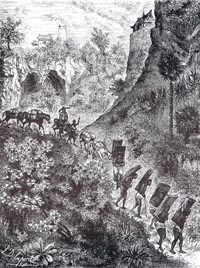
Mule caravan and tea porters, Yunnan. Engraving, Louis Delaporte, 1868
Mr Fang Yizhi wrote a book in 1643 ( Ming Dynasty ) saying that puer teas are steamed for compression for trading with nomads from the West (2). Like most Chinese scholars of his time, he was very general about accounts and did not say much more about the tea. We all understand that in order to compress a maocha, the tealeaves have to be softened by steaming first. ( Click here see video of how a maocha is steamed and compressed ) But what were these maocha? What category of tea were they? According to the same record, there were teas from many different provinces and regions produced for trading with these people of the “West”, were they the same?
then the term “hei cha” came in
Luckily, in the Qing imperial edition ( circa 1789 ) of the “Chronicles of Ming Dynasty”, we have a slightly more detail picture. In the accounts of the never-ending wrestling among the imperial government’s intention to tax; the traders’ greed to maximize profits; the nomads’ need for reasonably priced tea; and the producers’ stock inventory to sell, by the year 1524, a Minister Chen Jiang proposed a standardized quality of “hei cha” (3), i.e. “black tea”, to be used for all trading with the “barbaric” people from the West, referring to those ethnic groups who were within or outside of the west, northwest and southwest borders, although no further description as to the processing of the tea.
Please note that this “hei cha” is not what the English term of black tea defines today, since what is black tea to the West has always been called red tea in the Far East. And red tea had not been invented for another 300 years. This “hei cha” is what we currently labelled as dark tea, i.e. maocha turned black by various methods, as we have written about in the dark tea chapter.
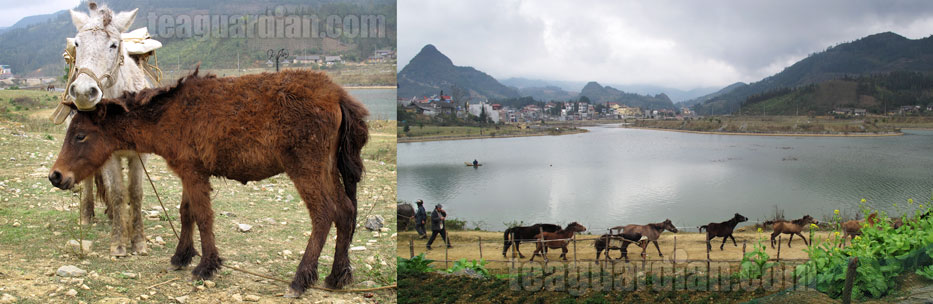
“Horse” trade is still practiced in towns outside of China bordering Yunnan today. These “horses”, usually mules or breeds related to ancient Mongolian strands, are farm resources for transportation and labour, as in the old days when they were traded for tea, porcelain, silk and other daily amenities.
shengcha tealeaves were to blacken for trading
Minister Chen’s idea has not been successfully implemented and “hei cha” of irregular quality continued to be a trading problem well into Qing Dynasty until the attention of imperial chronicle writers paid most of their attention to foreign and domestic unrests in the later half of the 19th century, but that is another story. So before there were detailed documentation, tealeaves were blackened for trading.
The maocha of “puer” that had been such employed, before it is properly blackened, is now sold as “shengcha”. Since shengcha is now an independent product, let’s look at its nature to properly understand it.
nature of shengcha puer
A shengcha puer, i.e. a “raw” puer, is a lightly oxidized tea much as a white tea is, although the former is rolled and twisted after withering before it is dried, while white teas that are popularly known, such as White Peony, is dried without extensive forming. The slight “fermentation”— enzyme triggered oxidation — one that defines what a white tea is, happens when the tea is laid in the thin pile for a few hours. This happens both in shengcha puer and Mindong white teas ( i.e. White Peonies, Silver Needles etc ).
-

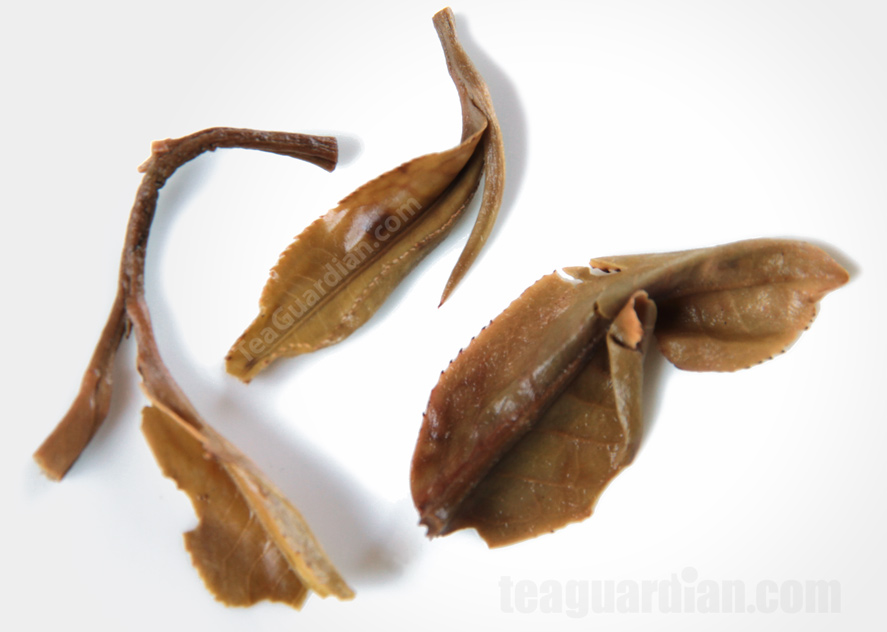
- Infused leaves of a fresh shengcha puer. Notice its striking similarity as those of baimudan ( White Peony ). They actually are the same category of tea: sunned and lightly oxidised — i.e. white tea
-
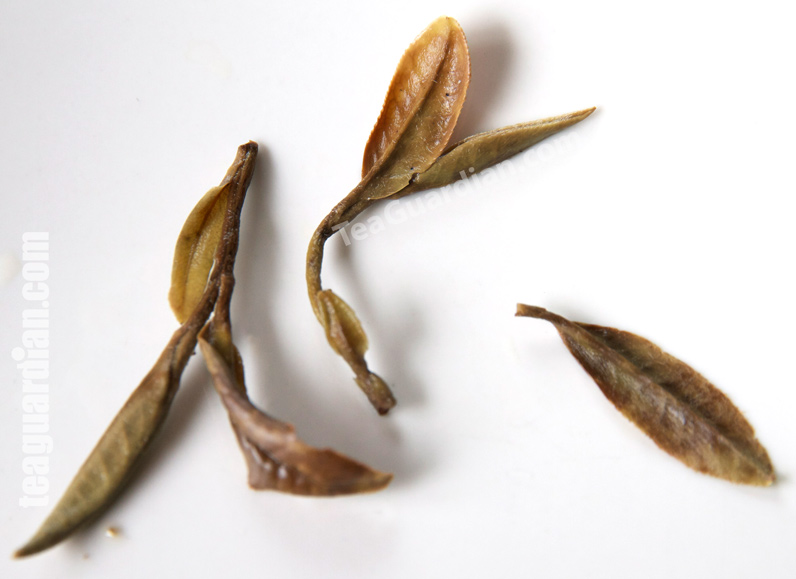
- infused leaves of white peony (bai mudan)
Also in both cases, the plucks are laid under the sun for an extensive amount of sun-wilting. While in some productions the leaves are taken through heated air at around 35~38°C, some are still laid in the bamboo baskets for a few days to naturally air dry, particularly those that are praised as from indigenous “wild” tea trees, and thus the pricier ones.
Oxidation takes place throughout the process, but unlike that in black tea production, where the leaf tissue structures are broken for rapid oxidation. Oxidation in both maocha puer and white tea are slow, slight and yet overall in the leaf.
shengcha puer is not a green tea
There are some who mis-interpret shengcha puer as a green tea.
While some white teas, oolongs, post-fermented teas and even some black teas are mature-able, i.e. develop in taste upon aging, green teas rarely mature. They just deteriorate upon prolonged storage. Green teas are, however, much easier to produce. The sunning and shade dry process of genuine maocha puer takes time and risks spoilage, while immediate baking or roasting the plucks — as in the production of green tea — save time and labour. This is a big temptation for the producers. Consequentially, there have been green tea made into discuses and other compressed forms and claimed to be shengcha puer. These products flooded the market between 2004 till 2009. They are still here in the warehouses of wholesalers and retailers, ready to be presented as “matured” shengcha puer. Be aware.
Additionally, there are teas of various other qualities claiming to be shengcha puer. Buying a good selection that is mature-able, therefore, is not as easy as it may seem. We’ll cover more about this in the storage for maturity article. …continue reading
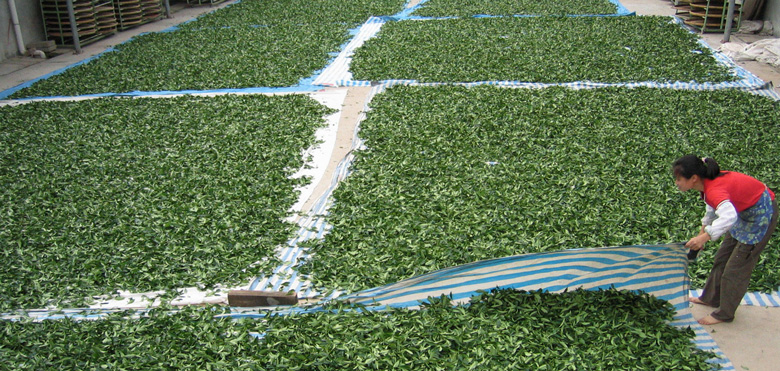
Tea leaves being sunned in a dense and thick layer in maocha production in Yunnan