Is Pu’er Cha Bing an Investment Tool?
The few record setting prices in auction reports that perpetuate the internet were rare arrangements rather than recurring functions like that of a normal commodity market. As in the selling of art pieces, antiques, or newly constructed apartments in much manipulated market economy of China, eyebrow raising prices are arranged performances intended to set the momentum for price surges to the benefits of the commodity producers, wholesalers, and as in many commodities, money launders. Pu’er cha bing is no exception. For a market whose access to information is restricted and alternative voices punished severely, puppeteering of anything is relatively much easier than in the West. The privileged few who live above the laws ( until standing on the wrong side of the power ) are always the benefactors.
-

- The diamond index has been rising steadily through the past 55 years with an average annual increase of about 14%.

-
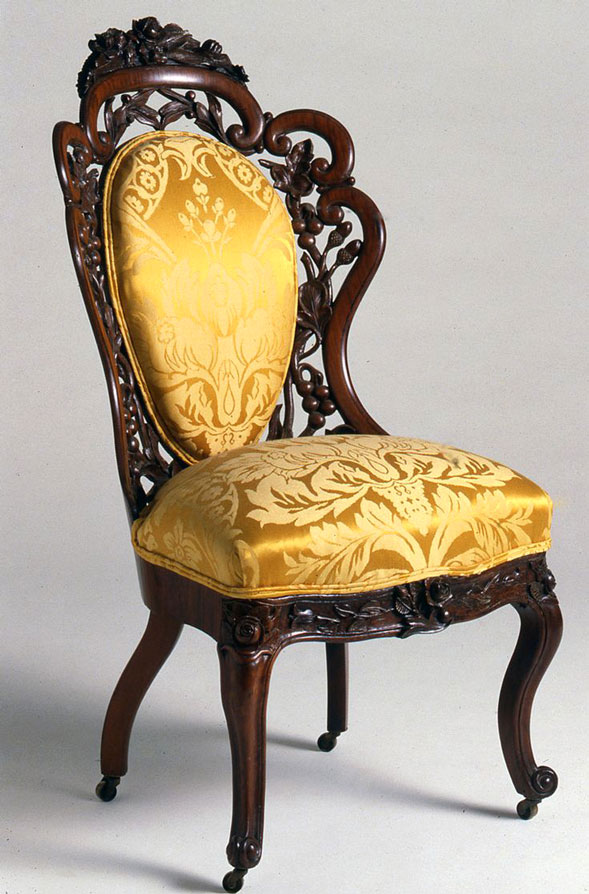
- John Henry Belter (1804-1863) is synonymous with American Rococo Revival furniture. One such piece in excellent condition can be obtained at around 5000USD, i.e. 30K CNY. The price has risen only very slightly since 2005. That is understandable for the economy of US.
-
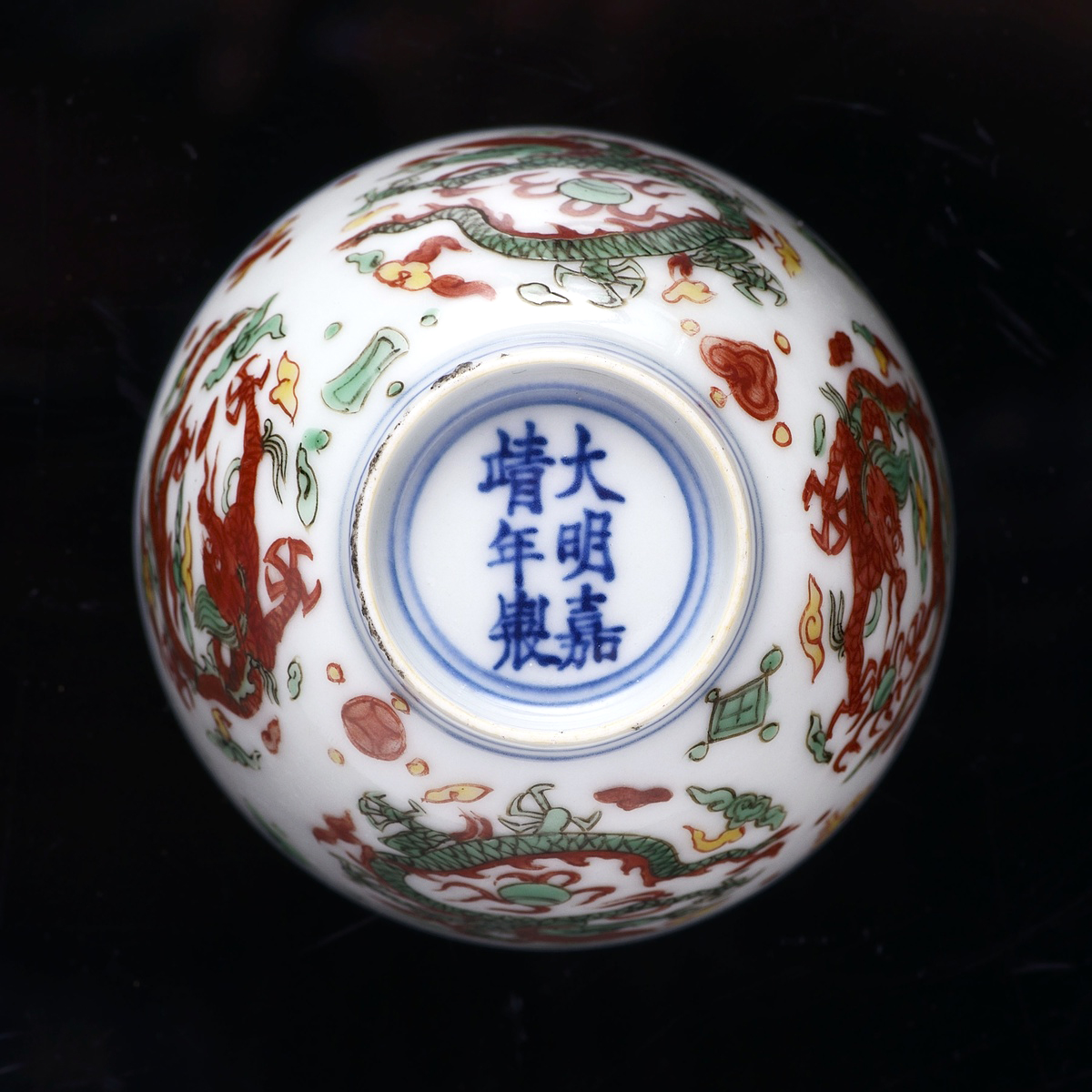
- In 2005, similar blue china from imperial kiln commanded 2~5M CNY a piece. In 2016, they have appreciate 10 times in almost all auctions worldwide. The general over valuation of commodities is fanned by the urge of a huge population of eager investors.
-
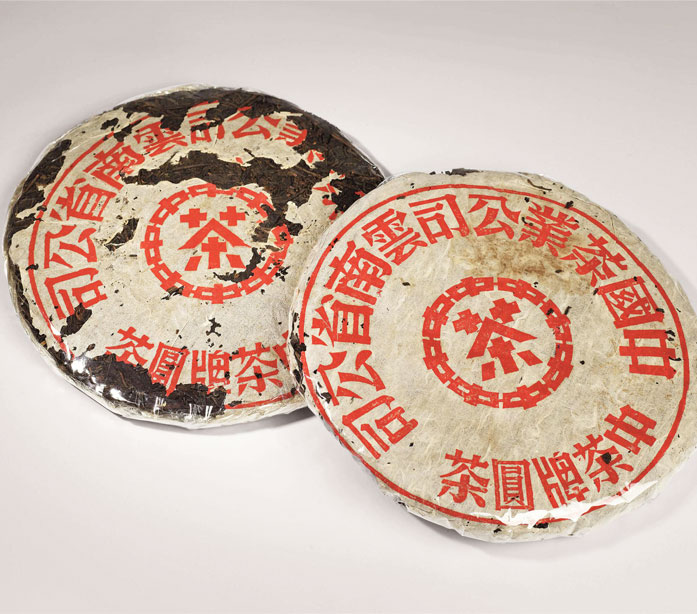
- Two red label “Zhongcha” brand pu’er chabings, claiming to be over 50 years old. In 2005 they can be demanding 500K to 2M CNY a piece. In 2016, most have fallen to tens of thousand.
Little actual value
Point 2: Unlike Ming vases or two-room apartments, where there have been established institutions and mechanisms to set the tangible values of, pu’er cha bings that are actually a hundred years old are fetching prices that are much higher than any other non-perishable antique items of the same period, yet it is not providing any corresponding value of historical, artistic, or detail material reference of the time. Needless to say, a mouldy lump of dried leaves kept under questionable packaging materials for over a century or even 50 years do not have the utilitarian values of any realty estate of comparable price in Mainland China, nor the basic functions of tea neither.
The only means of valuation would be its resale potential in a speculative market basing on who is the next person in need of throwing out a lot of CNY for something which does not have much innate values.
While there is a market for a diamond with the relevant certification, or a porcelain piece from a certain kiln of a certain craftsmanship or certain purpose, a cha bing that is a hundred years old should not be of more value than a Victorian chair from a reputable craftsman and it should not be fetching any higher price than it, even if we accept the fact that the bourgeoising market of China is making everything more expensive. Even the over valuation of many of the share-stocks there is child’s play compared to the science fictional price of speculative pu’er cha bing.
Where there is still an adulterated audited annual report for the inflated value of a company share, there is next to nothing to reference an old cha bing. Labels and packing materials, if traceable at all, are coarsely made and easily re-manufactured. Documentations are broken at best, and infiltrated with myths wrapped in fictional authenticity.
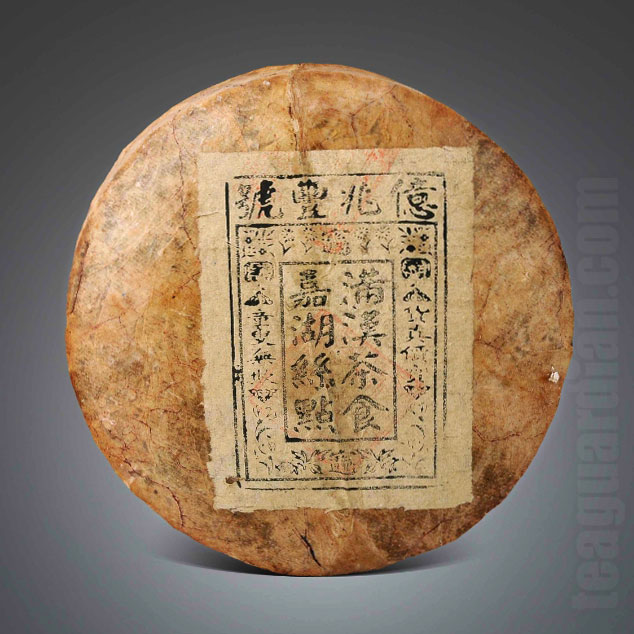
A faked antique pu’er chabing claiming to be from the late Qing Dynasty. The “Yi Zhao Feng” shop name on the label was actually a dimsum teahouse in Eastern China. The forgers did not even care to re-create a label more appropriate for pu’er tea and simply used a found old printing block for flyers for that old teahouse for a chabing label and claimed it was from Yunnan. It is not known how many people have been cheated, but reminent publicity materials claim a discus is worth a few hundred thousand Chinese yuan. Compressed tea products in various forms using this similar label are still available in a large number of auction sites and online shops at the time of this writing, though the scam had been busted two times in the past 10 years.
Imitation abounds
That brings us to a crucial point (3): quite a number of producers would not just sit there to watch the big brothers making all the money with basically the same thing that they are fully capable of producing or better. One way they fight back is to make imitations. Frankly speaking, ANY person with access to a compressing set up and a bit of printing resources is fully capable of producing a look-alike of a disc of dried leaves the big brothers are selling for the price of an apartment. And imitations for any products or commodities in Mainland China is no news. The problem here is multi-fold:
Firstly the price of a commodity, genuine or faked, is dependent on its quantity. Imitations that may even fool the reseller put a big unknown on this element.
Secondly, if even jade and master painting on rice paper can be faked, an imitation 50-year-old cha bing with scanty traces of authenticity is no challenge to the great pool of talents of Chinese forgers and myth propagators. The thousands of tea sites and bloggers hungry for eye-catching contents simply eagerly copy and paste the initial myths with the innocent purpose of increasing site traffic, but in effect becoming accomplices of the scam. Where reality can be manipulated, fiction can appear more real than real — a faked old cha bing can fetch a price higher than a genuine one.
Some high-profile cheats may have been busted, but the same phony products are still covering the walls and pages of auction sites and pu’er shops. Disguises of all fashions trying to sell you a cha bing with certain history at a pricetag far lower than its supposedly high appraisement. Greed is such an easy yet effective bait. A population who is conditioned to conform and follow brain-washing information is prone to deceit.
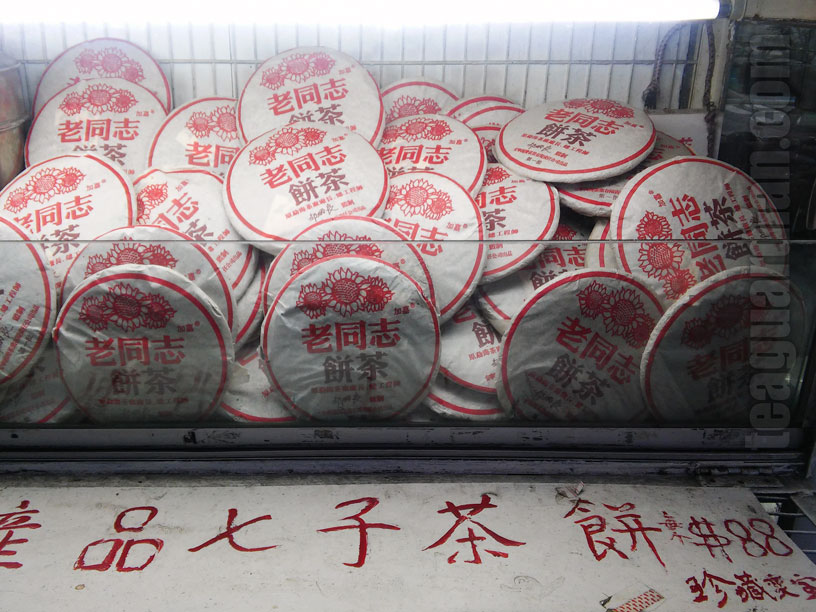
The sign reads: “…Product Qizi Cha Bing, each $88 ( HKD; 88 HKD is about 11 USD or 73 CNY )… store it well to turn it into treasure.” This store keeper scattered the products in an open plexiglass tray facing a busy street adjacent to some garages.
Point 4: No standards in storage, packaging and handling hygiene
While in wine, requirements are detailed for all elements involved that would affect the quality of a vintage, none such exist for pu’er. It is all dependent on the practice or malpractice of the producer and the collector. Temperature, humidity, light, the effect of the tea’s immediate packing material and even the surface hygiene of the tea and the duration of storage all work together with the initial quality of the tealeaves to form the final gastronomic value of the tea. Negating a standard for such requirements is like saying no standard is needed for the production processing of any other tea. Yet different producers, resellers and collectors all have their own ideas of the ideal conditions.