Shengcha
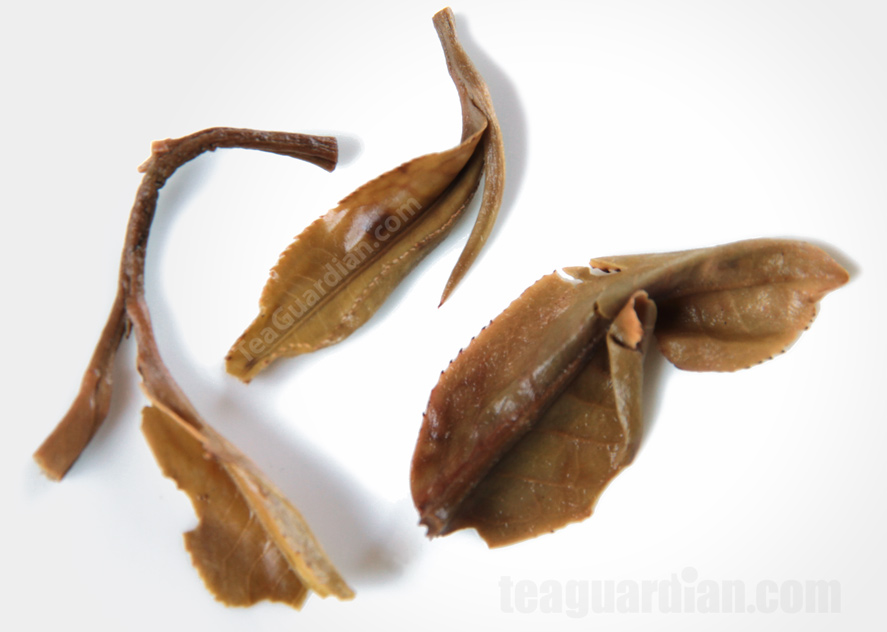
Pu’er teas that have not undergone post-fermentation are sometimes labelled as “raw” puer.
“Raw puer” is a transliteration of the Chinese expression “sheng-cha” ( Chinese: 生茶 ). As an adjective, the word “sheng” means not cooked, not ripened, or alive. The expression “shengcha” initially refers to the dried tea leaves of the puer variety that were meant to go through further processing, such as steaming for compressing or post-fermentation for darkening.
As people began to popularly consume puer tea at this stage, in order to differentiate it from traditional varieties that are darkened either “naturally” or through an induced process ( i.e. oudui 漚堆 ), a few names were employed to refer to such teas. They were: shaiqingcha ( 曬青茶 ), qingcha ( 青茶 ), shengpu ( 生普 ), and maocha ( 毛茶 ). In the end, shengcha came out as most popularly accepted. It is actually more accurate in conceptual meaning. It now refers to both the loose tea and the compressed tea that have not gone through post-fermentation.
The term raw tea has been used by some traders when using English as a communication medium. The term raw tea is quite misleading and we therefore recommend the use of the term shengcha instead.
The term shengcha can be found in the following articles:
- “Raw” Puer or “Cooked” Puer?
- Bulang Shengcha Pu’er
- Categorization of Teas
- Eight Immortals
- From Shengcha to Shu Cha, a Microbial Change
- Green Tea Production: Sun-drying
- Is Pu’er Cha Bing an Investment Tool?
- Laos Shengcha
- Making Tea with the Mug
- Maocha
- Nausea After Green Tea, But I Want It for Health…
- Pu’er: Myth of Origin & Reality of Blending
- Puer, a Post-fermented Tea
- Renaissance of Dianhong Part 1: the War
- Shou Cha or Shu Cha?
- Shu Cha
- Tea Against the Cold
- Tea and Your Health: an Orientation
- Tea Compression: Making of a Cha Bing
- Tea in the Thermos
- Tea List Gallery: Pu’er and other Dark Teas
- Tea List Gallery: White & Other Lightly Oxidized Teas
- Tea of the Resistance — Dianhong
- To blanch or not to blanch? That is the question
- Uji Gyokuro, Classic Representation of Japanese Green Tea
- What Really is a White Tea?
- White Peony, Real White Tea
- Zhenghe White Peony, Matured for 8 Years