Cultivar
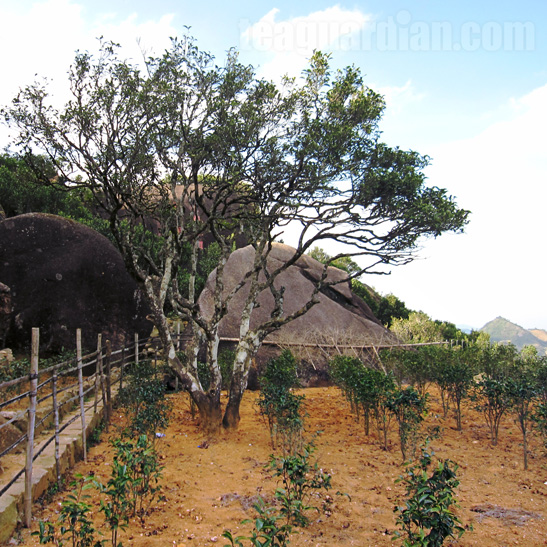
The 700 yrs old Song cultivar and its “off-springs”. Layering is the most common form of asexual propagation in tea farming to maintain the characteristics of a cultivar. Wudong, Fenghuang
In reference to tea, a cultivar is a natural or cultivated strain of the tea plant (Camellia sinensis) chosen for production for certain characteristics that differentiate it from other strains. These characteristics may be reflected in the appearance of the plant, such as the visual character of the leaves, the natural attainable height, or the way the branches are naturally distributed, etc.
To the producer, the characteristics of a particular cultivar that deliver economic benefits maybe more important. These maybe leaves that can be processed to attain a certain flavour; or maybe the plant’s resistance to pests or weather; or faster growing rate such that there can be more yield, or earlier or later flushes such that the labour for tea-picking can be timed for better utilization, etc.
Cultivars of unique characters, particularly for yielding tea of unique flavours, were initially discovered in nature and propagated asexually to retain the uniqueness. That is because once sexual propagation occurs, the genetics of one strain of plant will be blended with another to form a new plant of different characters. The producer may not like that. Propagating tea asexually is also a lot more efficient and so all the more reason the preferred approach once the desired character of a tea plant is found or attained. Layering is the most popular method used in such asexual propagation.
The desired character of a cultivar can be cultivated through planned pollination, but grafting is the more popular approach in real production and researches. The genes of the “father” and “mother” plants each of its own desired characters are blended by either of these methods for a new cultivar.
Taxonomically, a certain tea cultivar can be expressed as species > variety / subvariety > cultivar. For example, the popular cultivar used in pu’er production, Menghai Da’ye can be expressed as Camellia sinensis variety assamica cultivar Menghai Da’ye. However, mostly people just say Menghai Da’ye.
There are thousands of natural and cultivated cultivars used in tea production in the world today. China employs by far the largest number of them. The range of cultivars enables the tea farmers in this country to yield the largest variety of tea of all categories.
The term “cultivar” is used in the following articles:
- “Raw” Puer or “Cooked” Puer?
- 3 Tea Recipes for the Festive Season
- Any Health Benefits in the Tealeaves after First Infusion?
- Black Tea: Between Teabag and Hand-rolled Whole-Leaves
- Black Tea: Origin & Production
- Black Tea: Tasting & Buying Tips
- Bouquet Style Phoenix Oolongs
- Bulang Shengcha Pu’er
- Caffeine Content in 39 Tea Samples
- Caffeine: How Much is Safe?
- Categorization of Teas
- Classic Style Phoenix — Xingren Xiang Dancong
- Dancong as a hangover tea, a special recipe
- Dianhong Golden, Yunnan’s Black Tea
- Dinggu Dafang, Oldest Flat-style Green Tea
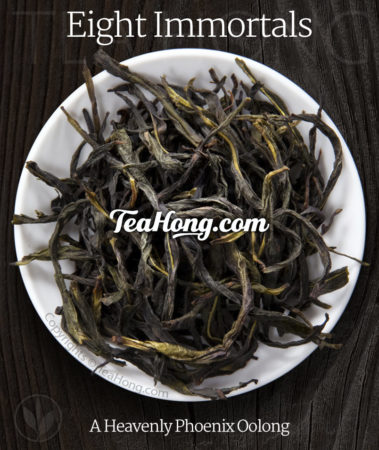
- Eight Immortals
- First Flush
- From Crude Provision to Treasure: Origin of Dark Tea
- From Shengcha to Shu Cha, a Microbial Change
- Fuding Semi-black: White Tea with a Twist
- Glossary of tea terms
- Gongfu Infusion: Chapter 2
- Green Tea Production: Baking
- Green Tea Production: Roasting
- Green Tea Production: Steaming
- Green Tea: Production
- How Fair is Fair Trade?
- Is a Semi-fermented Tea an Oolong?
- Jasmine Pearls, Crafted for a Reason
- Kaihua Longding, orchid style green tea
- Laos Shengcha
- Lapsang Souchong, The Original Version
- Leaf Shoot
- Luan Guapian, Big Leaf Green Tea
- Naming of a Tea
- Obscurantism: What Tea are you Really Buying?
- Oolongs: Minnan (Anxi) Varieties
- Oolongs: Phoenix Varieties
- Oolongs: Production
- Oolongs: Tea Plants & Major Regions
- Oolongs: the Gran Cru of Teas
- Oolongs: Wuyi Varieties
- Organic Spring, Taiwan Wulong Green Tea
- Phoenix Oolong: Classic Styles
- Phoenix Oolongs: Health & Buying tips
- Post-fermented Tea (dark tea)
- Pu’er: Myth of Origin & Reality of Blending
- Qimen Maofeng (Keemun Black Tea)
- Quality Basics 1: Various Plants, Various Qualities
- Quality Basics 3: The Myths of Grades
- Red Jade, The Fragrance of Taiwan
- Red Plum Classic: Tea of Heavenly Kingdom Revolt
- Renaissance of Dianhong Part 2: Competition
- Rougui, the Wuyi oolong before Shuixian
- Selected Bibliography
- Shiguping Wulong
- Silver Needles, the First White Tea
- Song Cultivar Huangzhi Xiang Dancong
- Stallion in Gold, Tieguanyin Turns Red
- Tea and Your Health: an Orientation
- Tea from the Himalayas: Nepali Black
- Tea Polyphenols: Tastes and Tea Choices
- The Large, Beautiful Green Leaves of Taiping Houkui
- The Nature of Green Teas
- Tieguanyin, the Quintessential Minnan Oolong
- Traditional Oolong Production: A Showcase
- Uji Gyokuro, Classic Representation of Japanese Green Tea
- Uva Green, in the Gongfu Spirit
- What is Orange Pekoe?
- What Really is a White Tea?
- Which Tea has the Most Catechins?
- White Peony, Real White Tea
- White Tea: Health & Buying tips
- Wulong
- Wuyi Meizhan
- Wuyi Oolongs: Tasting, Health & Buying Tips
- Yancha Shuixian, Wuyi oolong
- Yunwu, Cloud & Mist Green Tea