Oolongs: Phoenix Varieties
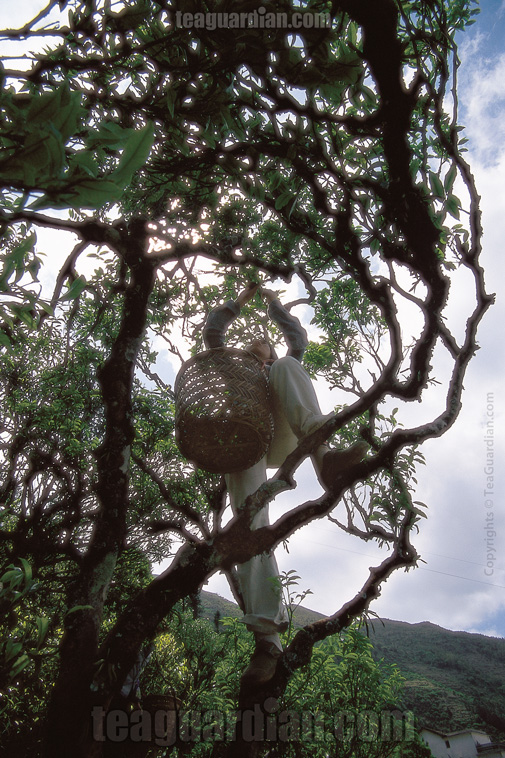
Girl plucking leaves on an old tea tree. Wudong, Fenghuang
Phoenix Oolongs
aka Fenghuang Dancongs (fèng-huáng dān-cōng) 鳳凰單欉
Orientation
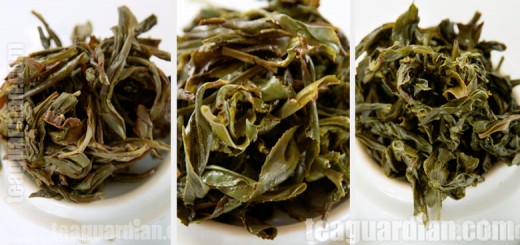
This is the most delicately produced oolong there is. Its long, slender, and tightly twisted curly leaves aptly reflect the origin of the Chinese name oolong, i.e. wu-long — Black Dragon. It has an origin that is another strong argument that it may very well be the oldest form of “wu-long” — Mount Wudong of the Phoenix Mountains. It is also the most skilled and labour intensive tea to produce; a tea requiring a lot of “gongfu” per se.
There are two streams of taste characters in this sub-category:
the classic, or traditional, style, and
the bouquet, or fragrant, style.
The classic style is characterized by a higher degree of fermentation and longer final baking process, resulting in a caramel overtone. Different varieties have notes of honey, ripen berries, peaches or baked sweet potato in their aromas.
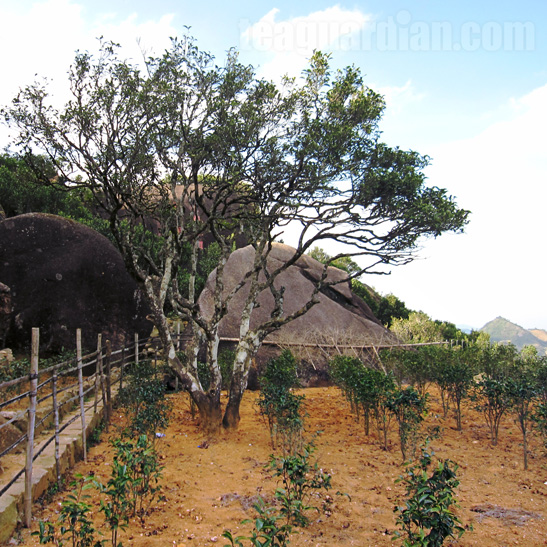
The 700 yrs old Song cultivar and its “off-springs”. Wudong, Fenghuang
Selections in the bouquet style have distinctive and pure floral aromas. The natural fragrant essential oils developed during the fermentation process are retained by a slow, low fire bake. Such fragrances differentiate themselves from artificial or natural additives by their clarity, endurance and integration with the taste and other aromas of the tea. They stays much longer in the throat and the sides of the tongue.
There are a number of popular varieties under either style and each is a different character. The great number of local cultivars as a result of over 700 years of oolong making and a much longer tea heritage of the indigenous Shé people in this region has given us this luxury of choices.
This is also a most interesting (and challenging) tea to prepare. A few effects are possible with each selection. Whether you prepare it with a nice porcelain pot, in a mug, or with a gaiwan as they do in the capital of gongfu tea, Chaozhou, the tea can be the finest tea can ever be, once you master the material nature of it.
Origin
Guangdong is the south-most seacoast province in continental China. Fujian, the province with the most tea varieties, is linked with it to the north. Lush subtropical vegetation covers the mountainous areas adjoining the two provinces. The Phoenix Mountains, where Phoenix Oolongs are produced, are stretches of mountains not over 1500 m (4,950 ft) from sea level within the northern borders of Guangdong.

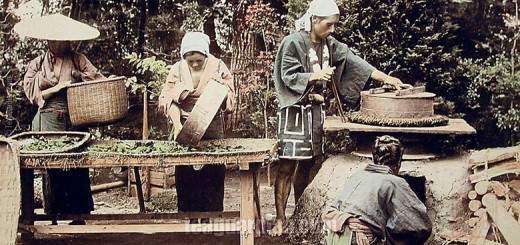
Sun-withering in Fenghuang Dancong production
Old oolong tea trees abound in these deep mountains of Phoenix. These are ancient plant varieties which unique tissue structure date back to over one millennium (1) and are the progenitors of the prevailing traditional group of cultivars — shui-xian — in the regions of both Wuyi and Phoenix.
The production method still practiced today in Phoenix is another strong evidence that this maybe the origin of oolong. The steps in plucking, sun withering, “fermentation” and drying are all broken down into small and skill-demanding procedures that result in a superbly artistic tea in a truly traditional fashion, when compared to the best of any other tea production in practice today.
Before the “Great Leap Forward” and “Cultural Revolution” disruptions in the 1960’s through the 70’s, it was common practice here that the leaves from each single tea tree were processed individually, so as to maximize the quality and maintain the taste character of the product of each tree. That is why Phoenix oolongs came to be known as Dancong (dān-tsōng) — Single-bush — amongst the connoisseurs. It was also the reason that this tea had never found its way outside of this very county, other than a few privileged and connected — the quantity was so very limited.
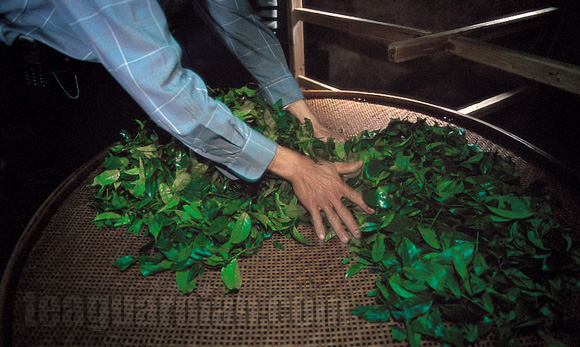
Leaves are being lightly pushed together in a gentle rythem in the beginning of the zao qing process
Today, asexual plant propagation is employed to maintain as best as possible the biochemical composition of individual cultivars and thus the taste characters producible. However, there are a large number of older trees which harvests are still individually processed in the traditional manner. A few of them are between 500 to 700 years-old.
While the absolute majority of Phoenix oolongs are these dancongs, there are a few other oolong varieties in this region that are not produced from shuixian cultivars, but from wulong ones, such as the elusive Shiguping, the versatile Meijian, and the almost extinct Hong Yin. We shall discuss them in other articles.
Tasting notes
This is a very delicate tea to prepare. It will be scalded when the water is too hot; but the full aroma would not show itself when the water is not hot enough. In the area of its origin, people infuse using a gaiwan with very short duration. This is NOT the best way to prepare this tea for the taste, but a healthy way of drinking it all day long.
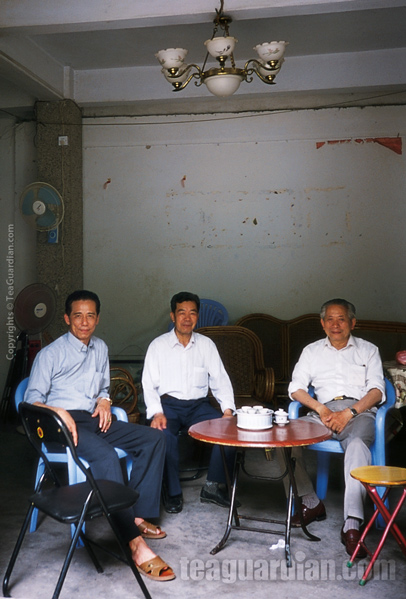
Tea gathering in an old party-owned “study hall” in the old part of the city. Chaozhou, the city immediate to Phoenix (Fenghuang), where Fenghuang Dancong is the way of life. At least to most people before drinks in aluminium cans broke in.
Contrary to some old timers’ belief that all oolongs should be infused at full boiling water for a few seconds, a fine Phoenix just simply makes no difference from an ordinary one when infused as such. You don’t really taste much tea that way anyway. There are many ways to steep the tea well, and if you feel you need more understanding of the tea and the preparation techniques, do go to the standards reference in this site and experiment with the actual tea.
Make sure you absolutely decant your tea after the proper infusion time. Because of the strength of these particular teas, over infused liquor is really strong.
If you are not sure, always stay on the light side to infuse for a fraction of the required time. Say 2 and a half minutes rather than 6 using conventional approaches; or 20 seconds instead of 30 or 45 in gongfu approaches, and use a bit more leaves instead. This way you can repeat infusion a few more times and not wasting the tea.
Learning to prepare this tea right for its maximum taste does pay off and once you tried the true taste of a really fine Phoenix, you will understand why this is my personal favourite.