Phoenix Oolongs: Health & Buying tips

A group playing a taichi dance in the corner of a small park, Chaozhou. Health consciousness has been a tradition in this small city where Phoenix oolong is the defacto tea of choice.
Dancongs have a health nature that is very different from any other teas. I have said this without any backing from scientific findings, because there have been no such studies yet. I am writing this purely from empirical understanding.
Health notes
This is the most effective tea for preparing the body against infections in the respiratory system. We use this tea whenever we feel that we may be under attack because of the places we have been, or the crowd that we have been with, or when we are tired, or when the throat is beginning to feel not quite right.
The bouquet style is particularly effective using the gaiwan approach, employing a lot more tea and short infusion time, for example, a 150 ml gaiwan with 5 gm of tea at 90°C in 30 seconds for the first infusion, adding one fifth the time each round. You may want to use more tealeaves once you are comfortable with the strength.
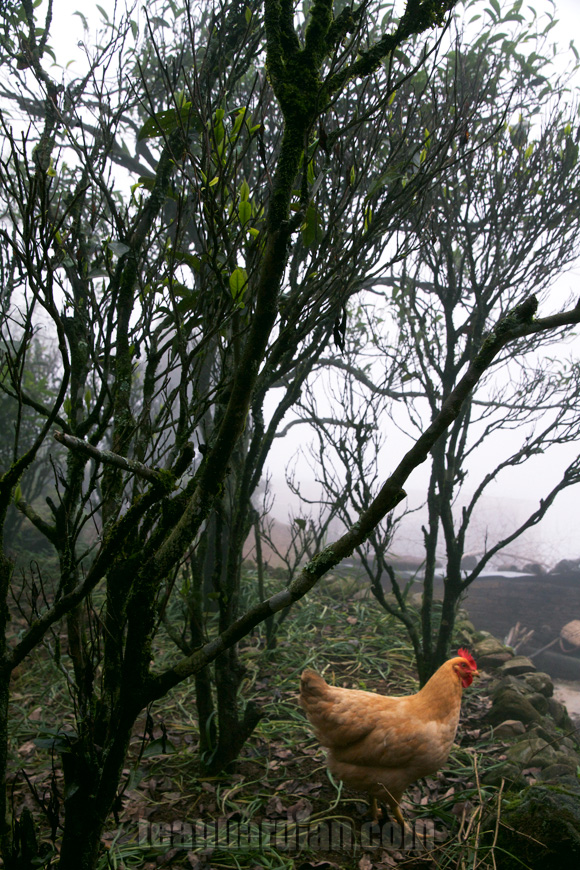
Free range chicken in the free growing tea bushes in Phoenix. It is traditional quality throughout the production environment of Phoenix Dancongs that gives the oolong subcategory its uniqueness.
This is also the most effective way to get rid of the excessive fluid that one may find in the bloated face or body, or when one feels really heavy.
I suspect that this tea has a relatively higher caffeine and theanine contents that work in synergy to achieve the effects. The unique aroma substances have some role in this too. Carbon study of the tree plants in Phoenix has indicated that these are species over 1000 years old, unlike most other that are for green, black or other oolong cultivars. That means the medicinal properties of its raw material is more similar to what tea was like when it was used in the beginning as a medicine. It seems to me, however, that it is the matching of the particular production processing and the unique plant nature that gives the tea its chemical characters.
Please be advised, though, this is not a medicine, only an alternative that we have found to be more effective than the other usual approaches. Consult a physician when you are ill.
Dancongs are also effective digestive. This tea may be strong to certain people. Drink in small sips while the tea is still comfortably hot. Don’t drink this tea cold. <Read more about dancongs>
Buying tips
There are over 10 popular traditional varieties and about 15 other rare ones under this sub-category. A selection under each variety can be of various qualities, as a result of different cultivars, horticulture, harvesting conditions and production skills.
-

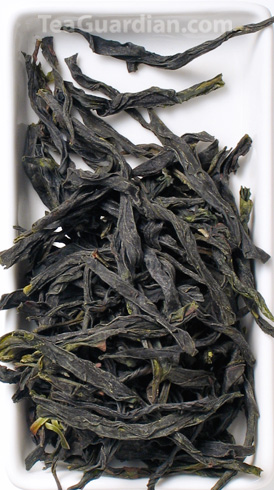
- Lanhua Xiang Dancong 蘭花香單欉, bouquet style Phoenix oolong
-
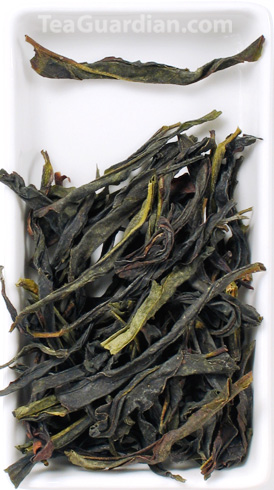
- Xuepian Lanhua Xiang, 雪片蘭花香, a winter harvest Phoenix oolong with lucious floral aroma. 20311 | 8659
-
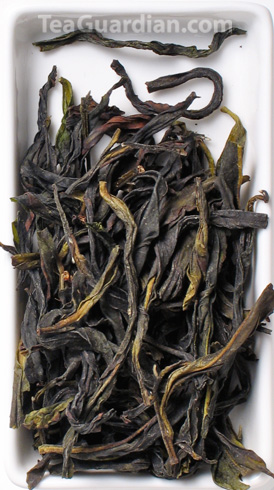
- Baxian Dancong, aka the Eight Immortals, is a traditional Phoenix shuixian oolong in light baking, i.e bouquet, or qingxiang, style. 鳳凰八仙單欉
-
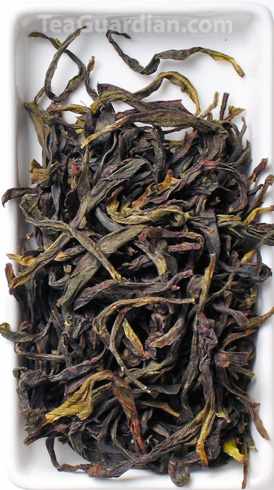
- Song Cultivar Huangzhi Xiang Dancong used to be the most popular and acclaimed of all classic style Phoenix dancongs. Yet most producers now process it to the bouquet finish to highlight its kumquat accents.
-
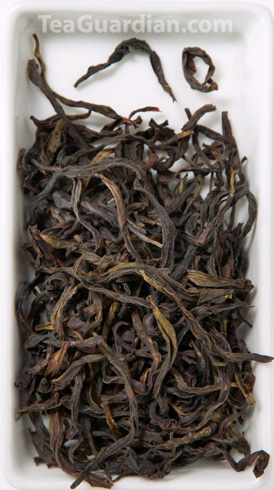
- This particular batch of Milan Xiang is from Wudong, the mecca of Fenghuang Dancong. The duller surface is a result of the additional twisting done particularly to most longer baked classic styles, where the tea juice dries out to leave crystallized tea substances on the exterior, a great portion is caffeine. Notice the distinctive more baked colour of the leaves. Better executed bake is never over, reviewing the lighter colour yellow leaf ends. Milan Xiang, whether ganged with other bushes of the same cultivar and quality, or really from a single bush, has a temptatious fruity sweetness resembling either the peach, lychee, or sweet yam, depending on the horticulture and processing.
-
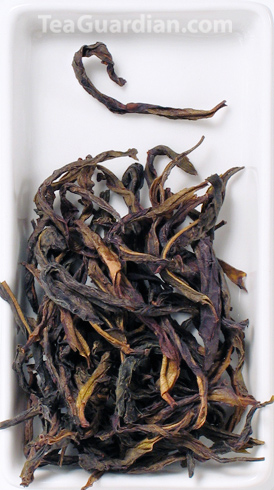
- This is an acceptable quality batch. Notice the close resemblance with Milan Xiang, and the typical longer bake, except for the looser twist and coarser leaves. This is nevertheless a first flush. Guihua translates as osmanthus flowers, relating to the natural fragrance of this variety. A favourite in the domestic market and finer ones are rare outside of the Chaozhou area, even at a price. Producers have resort to scenting various quality grades with osmanthus flowers to imitate the natural, making the label more accessible. We’ll review this scented tea later.
Take Huangzhi Xiang (lit. translat.: The Fragrance of Mandarin Orange Flower (note)), for example. The original tree, which is one of those over 700 years, has generations of off-springs that are from sexual and asexual propagation. Trees inherited with genes from another cultivar would yield tea of different tastes. Even with asexual propagation using only components of the mother plant, the age, locality (and therefore micro-climate as well), processing and horticultural practice contribute to variations in the gastronomic properties of the product. Therefore, even with the same name and price, the product offered by producer Chen may very well be different from producer Wen.
In gardens where the growing conditions enable winter harvest, the yield from the same trees differ quite dramatically from that harvested in Spring. Although first flushes are always superior, fine quality winter harvests are characterized by more luscious bouquet aromas, albeit shorter, more bitter tastes.
In another word, a batch of Huangzhi Xiang offered by Chen in the east of Phoenix may taste very differently from the one by Wen in the west. Chen’s spring harvest is also dramatically different from his own winter harvest. The fun part of this is that there will always be new discoveries and improved understanding. This has always been a great reason for my special affinity with Phoenix tea. The diversity and vibrant energy behind this most traditional production practice could perhaps show us something to carry the world forward beyond globalization and mass market economy.
In commercial grade products, however, where productions from a number of farms are ganged to form a grade, the difference would be only between grades and between dealers.