Obscurantism: What Tea are you Really Buying?

Parroting is a serious issue in the tea market where most people do not have good grasps of the truth and reality about the product and market information. For the sake of gaining presence, however, many choose to echo content which sources may be inaccurate, untrue, and laddened with various agendas. Many also generate such sources.
so why have some people tried to obscure the definition of oolong?
Outside of China, where oolong originated, only Taiwan and some regions in Thailand and Vietnam are producing teas that can be technically defined as oolongs. Accessing these sources is easy for some, but difficult for others.
Proper oolong production requires intense skills throughout the process. There simply is no such personnel in the other tea production countries and few are humble enough to reach out to learn. They also lack the diversity of cultivars that is crucial in oolong production, and many tea producers in these countries are still not believing this.
However, the key issue lies in the cost. Even the least developed of the above four countries, the average tea workers’ salary is much more reasonable than most other tea production countries, such as those in India, Sri Lanka, Indonesia and not to mention Kenya. Tea from these places can be a lot lower in cost.
Nor are these places willing to change the way they have set up for minimising procedures and maximizing throughput.
plantations are industrialized tea gardens
Plantations ( as opposite to tea gardens in small farms throughout oolong regions ), setup by the British and other European nations during the colonial era, basing on the thinking during the early days of industrialization and mass production, are far from capable of the change required to properly process oolong. Knowledge, special skills, and appreciation of quality on the side of the workers are not in the formula of “production line”. Not to mention in-time and small batch processing.
To squeeze oolongs out from these lines unlikely, the alternative is to re-define oolong as something that they can easily adapt their production set up to produce.
So you can complete the story.
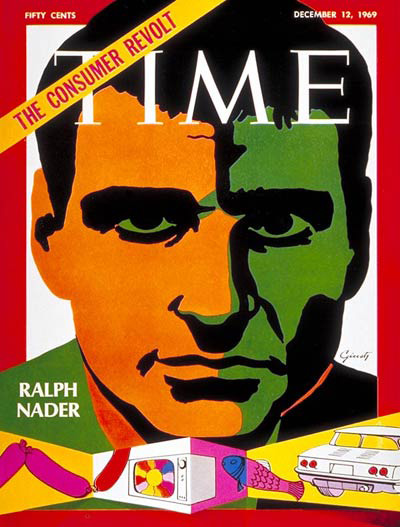
Ralph Nader: The Consumer Revolt Time Magazine cover Dec 12, 1969
Control of the voice that the consumers listen to determines what is the real oolong, or for that matter, real anything. It is this “re-aligned reality” that consumers base their decisions upon. It is the reality defined by whoever has the most resources to dominate the voice.
It is therefore, an intentional decision, rather than an ignorant one, for people with influence in the West to define a category of tea more conveniently suitable for them to exploit the profit margin of, or to easily sell another variety without having to educate the market. They know the majority in the trade will follow.
Parroting is human nature
The trend for white tea that began a decade and some ago triggered the same redefinition endeavours. A large proportion of products under the category of white tea in many teashops operated in the West are not white tea at all. ( What really is a white tea? )
The health effects of tea, because of recent scientific findings, is yet again another topic which market communication is heavily manipulated. So are the counter-strike communication efforts from coffee, wine and other beverages.
If the nature of tea is a target for obscurantism in the West, there are by far a lot more subjects in tea that are mystified in the East by way of influencing parrots. Following what others say without finding out the facts by themselves is a universal human condition that entities with the power to manipulate have known too well. Copying text from the internet to populate one’s own website to boost traffic is far too easy, far too tempting than the handwork of fact-finding and telling the truth.
This needs to change.
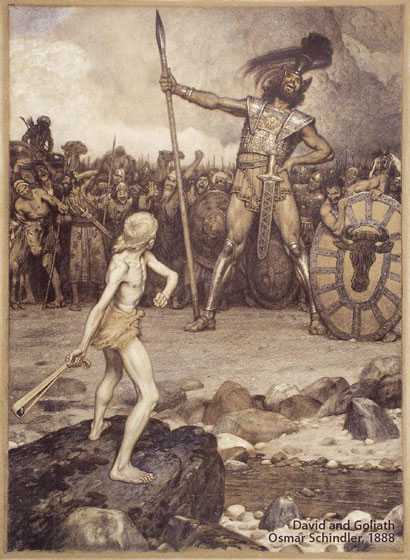
David vs Goliath
Small operators does not have to be the losing one
don’t let them blacken my picture of the world
In 1965, when Ralph Nader began to criticize the American motor industry of unsafe vehicle designs, he not only started a consumer’s rights movement, but also rang a wakeup call for taking back facts finding and information communication in our own hands. In terms of resources, this is like David vs Goliath — Nader was only a young lawyer from an immigrant family then. Big tea companies have deep marketing budget, we small teashops and consumers have only our time for writing on the internet.
Nader’s effort has given us consumer rights organisations such as the Consumer Council in your home country. To some people, tea may not be as serious an issue as cars without seat belts, but to others it is something a lot more intimately related to our body and health. Obscuring the truth and thereby excluding the access to genuine quality is defying the consumers from the enjoyment and benefits of the real thing. It is “blackening our picture of the world”. We are working against it. Wouldn’t you do the same?