What are Compressed Teas?
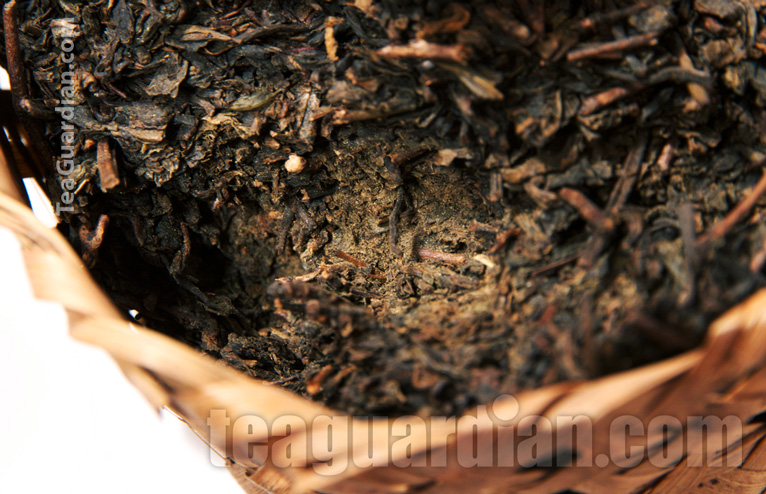
Soil and sand in the inside of a compressed tea, which is nicely packed in bamboo leaves and bamboo basket. Immoral practices in production are not uncommon these days and the form of compressed tea is convenient for certain people looking for high margin.
purchase considerations: Caution
The larger compressed form, ranging anywhere from a few hundred grams to a couple of kilos (2), is a solid block (tea brick is not an exaggeration). To use it, one needs to chip out, with much efforts, a desired portion. There are various impractical tools that have been developed lately as part of a fanciful collection together with the tea, but the really useful tools are pliers or hammer and chisel. Or wait out for ten years or so when the brick begins to crumble.
The major drawback of the compressed form, however, is quality.
There are three ways quality may get compromised.
- The additional steaming, compressing and drying processes that may expose the tea to more opportunities of deterioration, especially on the absence of good process management practices
- Believing in the myth that the compressed form is resilient to environmental damage and therefore mishandling of the tea, causing deterioration during transportation and storage
- Pretty on the outside… In fact, it used to be a tradition for some makers to put better quality on the outside and not so respectable one inside. I have seen sand, plant parts, bamboo strips, other leaves inside a compressed mass. There certainly are respectable makers who don’t do that, but there are those who do.
Tea Maturing?

A so-called “matured” pu’er discus that has been subjected to humidity during storage.
Some argue that the compressed form is a better way to mature tea. It definitely is not. There is no proven science in the maturing of tea yet so I am posing the three most used hypothesis here to debate the compressed form’s validity.
- If maturing is by way of very gradual contact with oxygen, the tea that is not on the surface of the solid block receives air much slowly than that closer to the surface. This entails very uneven oxidation.
- If maturing is by way of residual enzyme activities of the “sheng cha” tea, then the very process of steaming the tea for compressing destroys the “life” of these enzymes, and there is no reason for compressing altogether.
- If maturing is a process by fungus action, such as in post-fermented teas, the harden surface again is counter-productive. And since the storage environment is not the same as a post fermentation production environment, there is no way the maturing process can be managed any how. The outcome is then questionable quality.
It is not to say that I oppose to tea-maturing. On the contrary, I am very particular about it. Later articles shall cover that. Compressing teas is just not the best way to mature teas with.

Compressed tea: Pu’er discuses ( cha bing ) in bamboo wraps.
Speculation had taken place on the theory that the older the tea discus, the more value it would appreciate. A whole scheme with wholesalers, retailers, books, internet sites, discussion forums, talks by so-called puer experts, lobbying with the Beijing government, etc had evolved to support that theory. Re-constructed “history” of various brands, labels, and tea-hongs infiltrated the markets to fuel that craze. Antique looking wrapping papers and leaves of all fancy stories and looks were put on display to fetch outrageous price.
To me, compressed forms of tea have played their historical roles and we should admire them in museums for what they were. The taste and salutary value of post-fermented teas or any other teas DO NOT appreciate infinitely with time. While I agree that better quality teas should attain a price structure that is more reasonable to the planters and producers, it is not a good practice to inflate otherwise honest values for what each specific selection is worth. The speculation craze seems to have calmed down for a year now and I hope it is not coming back. Some people have reaped a good fortune, while others have been victimized, and yet the remedies to the bad effects on the market have to be invested by others. Although I have sailed clear of it, it was a most disastrous development in the Chinese tea trade in recent history.
Again, before you can find a really trust-worthy supplier and attain good physical understanding of the tea, stay with loose tea that looks clean and that won’t bankrupt you.
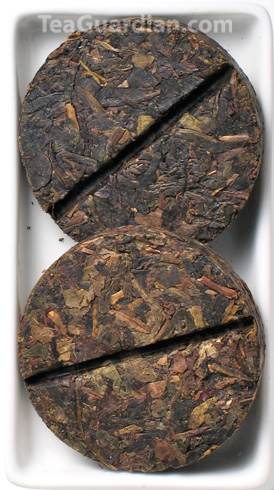
Zang Cha Tablet 藏茶小圓餅, a dark tea popular amongst the Tibetan people
Loose tea, under proper conditions, actually mature much effectively and with more satisfying results than compressed tea, whether “sheng cha”, “shu cha”, white teas or oolongs.
Smaller for a purpose
I am endorsing, however, the ingenuity of the dosage size compressed form. I think it beats the teabag as a great packaging design. It can deliver relative quality with comparable convenience of the bag. It’s pricing reflects practical usage rather than collection (generally speaking, but there are still absurd prices for mundane quality around). Properly produced, the form enables more even maturing than larger forms. I think this is the way to go for the benefits of both the consumer and the trade alike, although nowadays producers have always used much better quality in the larger sizes for better prices. Single dosage products target basically low-end users and as such only a few manufacturers are still putting efforts in quality.