Black Tea: Origin & Production
Etymology
30 years after the first commercial import of 143 pounds of tea, Britain setup her first tea buying office (known at that time as factory) in Canton (known now as Guangzhou) in 1699. That same year, John Ovington, Chaplain to King William III wrote of various tea selections available in England, “The first Sort is ‘Bohea’… Those in China that are sick, or are very careful of preserving their Health, if they are weak, confine themselves only to this Kind of tea…” (1). He then went on to described other teas, which were all green.
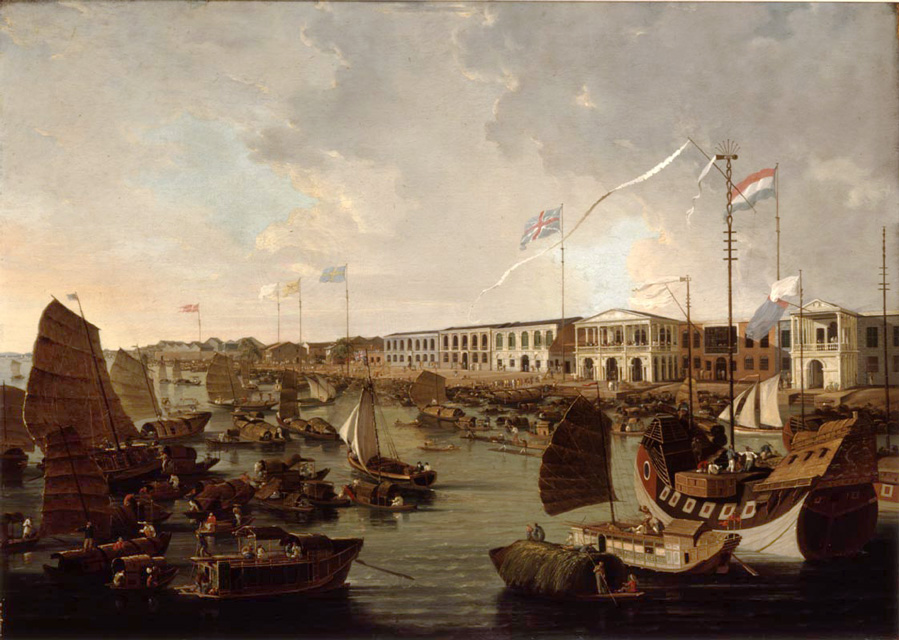
The “13 Factories” in Guangzhou where trading nations set up their offices and the Chinese government kept a watchful eye on the foreigners’ movement. The location is opposite of present day Shamian district.
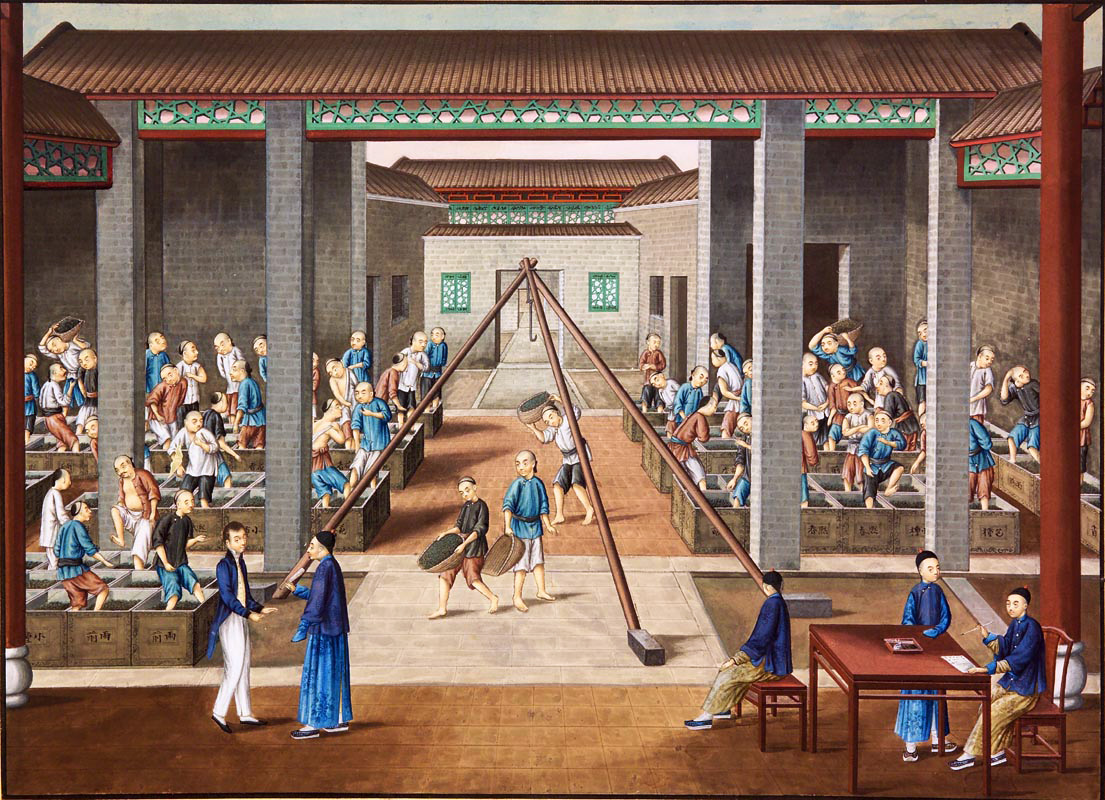
Far top: Tea Packing in Guangzhou, detail of an export painting circa 1820~40.
Notice how quality gives way to profit margin to have the tea stamped upon by foot in order to pack tightly for shipment. (Read more about handling and storage) In the foreground, a Westerner, very likely to be English, negotiate with a Chinese.
Interestingly, in China, Wuyi oolong was considered a safe tea for the weak and the elderly and was used to treat minor ailments (still did when I was very young) in Fujian and Guangdong. Wuyi was spelled as Bohea, which was a transliteration of the Amoy dialect for the same Chinese words as Wuyi. The Chinese name that the word “oolong” is translated from — wu-long — literally means “black dragon”; the tea which the West now refers to as black tea has always been called “red tea” in the Far East.
A few years prior to Ovington’s statement, a tea advocate and Buddhist monk by the name of Zhao Quan wrote in A Wuyi Tea Song, “Ships from the West come here (Amoy) every year to buy this tea… so Anxi tea is made to the look of Wuyi tea, roasted before it is baked. The two teas become virtually the same.” (2) This clearly indicates a tea produced through the oolong process. The black tea that the West imported in those days was Wuyi style oolong rather than the red tea (3) that was yet to invent. Anxi, even to this day, has rarely involved in red tea production. When red teas came about in the following century, were grouped as black teas by the West simply because of the similar dark colour like the oolong tealeaves of Wuyi.
a obscurred beginning
-

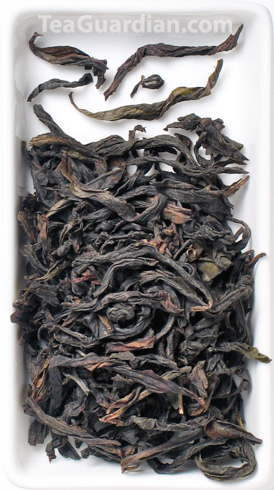
- Rougui, aka Cassia 肉桂, a Wuyi 武夷 oolong. 20049, 2007 | 8966
-
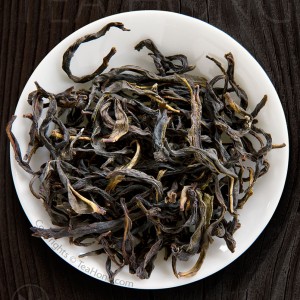
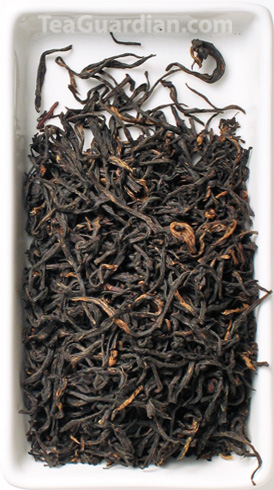
- Tangyang Gongfu: To the west of Zhenghe and all the way to, and including Wuyi, are numerous regions that were some of the first production bases for export teas. Tanyang Gongfu is produced here with cultivars totally different from the Dai’bai strands. The traditional Xiaozhong strands produce teas that are smooth, quite long and tinkling. Newer cultivars that are introduced from Yunnan, that is, strands from the Camellia assamica variety, produce teas that are stronger but less complex in taste. Perhaps for productivity reasons, the latter is now a lot more popularly used for producing Tanyang Gongfu. This selection here is a grade 2, and more than a year old. Newer ones looks glossier and taste freshers too.
Bohea continued to be the “black tea” consumed by the West until mid 18th century, when names as Congou (aka Gongfu) and Souchong began to appear in shop menus and family accounts in London. These are names associated more with red teas. In 1732, the county governor of Chongon (that Wuyi was in) wrote in one of his published diaries (4), “By the end of the ninth bend (of the river, which is the river that runs through Wuyi) in the mountain, there is a village named Xing Cun (Star Village) where tea traders come together. Some are from out of county… as well as from Guangxin (5) in Jiangxi Province, carrying with them their productions, a tea that is black but with red infusion. They call it Jiangxi Wu. They sell their products to local wholesalers in private.” This is probably the first reliable mentioning of the existence of red tea. Xing Cun was a wholesale centre for tea merchants who trade with tea hongs, the export companies. It was likely that gongfu and souchong varieties were either various localized versions of this Jiangxi Wu or they were simultaneous innovations. It can be induced that red tea was probably invented sometime before 1732 in this or a neighbouring area.