Tea Storage: Containers

The quality of your tea is dependent on how well it is stored
To have understood the need to protect tea from the elements listed in the previous article, now it is only logical to choose carefully proper tea storage containers and how to use them to best protect the quality of your tea.
It seems easy enough to spot a badly packaged product so you know for sure that the quality of the content is compromised. However, the true nature of some of the popular packaging and storage materials that we have taken to think good enough are actually not doing the job. Take care to check the containers you are storing tea with are effective to block the listed elements. Same for understanding how the product is packed/stored before you buy it.
Below are some examples of good tea storage containers:
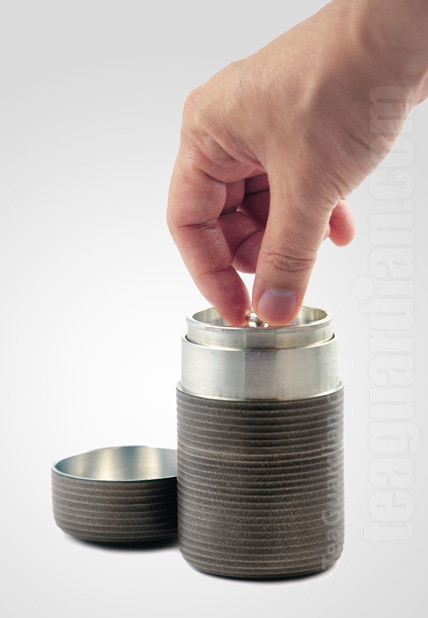
Double lid pewter tea caddy
Pewter Caddies
Pewter (1) is a most favoured traditional material for it can be quite precisely machined for deep lids. It is odourless, rust free, and can last forever. Use a double lid design for the extra protection of the air-trap. The shortcoming is its higher price tag. However, the tactile feel of this heavy material and the care needed to make good pieces are worth the price. Traditionally, Malaysia produces excellent quality, except for the design style, which may not appeal to all people. Japanese designs are superb and their price has gone down quite a bit through the years. Most are either made in Malaysia or with Malaysian material. Quality and designs from China has been improving but still need some catch up.
True stainless steel double lid caddies
Stainless steel is a much more practical material if you need larger and more containers. A good grade, such as 316 or better, is preferred to avoid possible rusting. There should be no seams. Two layers of precisely fitted lids are needed as air trap. Make sure no odour or grease are present when you first put tea in it.
Aluminium laminated P.E.T. bags
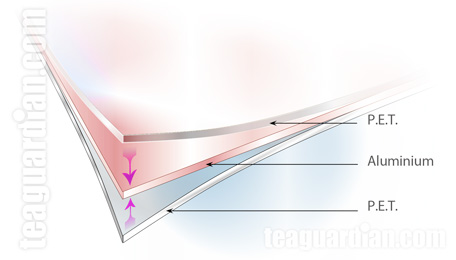
A good grade aluminium laminate comprises of at least three layers of materials, two layers of polyesters (PET) sandwiching an aluminium layer. Beware of cheap imitations that are costing the quality of your tea. The most popular ones are those silver looking plastic foils that does a poor job in sealing off the elements. Hold a bag against the light and if a dimmer light comes through one layer, the bag is sheer plastic with a silvery coating. No good.
A truly efficient material for the trade and serious connoisseurs is aluminium laminate. It has the non-permeability of aluminium and the versatility of plastic. A good grade laminate comprises of at least three layers of materials, two layers of polyesters (PET)(2) sandwiching an aluminium one. These bags provide a most affordable but secure alternative, except against mechanical damages. Use it with carton boxes or tins for complete protection. There are different varieties where a layer of paper is employed — the fibers in the paper lend physical reinforcement to the alu layer so these are better than just plastic and alu laminates, if the plastic layers are too thin.
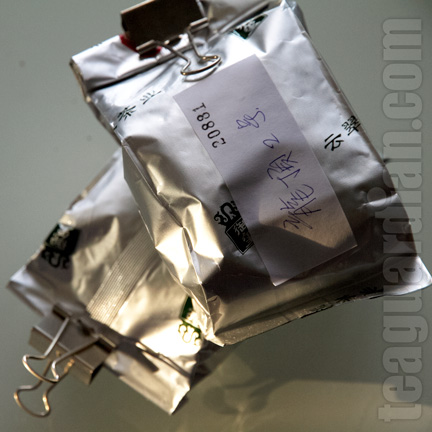
Aluminium laminate bags for tea packaging, two packs taken from our sample room. Not all that is silver are true aluminium. Read the text to learn how to differentiate them.
Using this more flexible material also takes a bit more care. Make sure that you do not re-use it too many times. The corners and folds tend to wear and the micron-thin aluminium layer easily broken and the protection weakened. The weakest point is always the opening. Fold the material a few times before applying a strong clip to ensure a good air-trap. The advantage of this material is its plastic outer. Most are heat sealable so you can seal up your pack for longer storage.
There are materials that may look similar but are actually aluminized plastics. Many grades are being used in the market and all are light permeable and a lot are not air/moisture-tight. To distinguish an aluminium laminate from an aluminized plastic, hold the materials against a light source. You should be able to see light coming through the cheaper material. A true aluminium laminate is not light permeable.
Foil-lined Cartons
Cardboard cartons lined with tinfoil are usable only when the lid is fit and deep; and when there is an additional PET, PE or aluminized plastic bag. Leaking through the seams in the designs of most of such cartons are the major faults for the need for the additional bag.
Glass
Glass is a good insulator against air and moisture when the design of the lid is good enough to ensure insulation. The obvious shortcoming is its transparency; even those tinted versions. Put the thing in a cardboard carton to take care of the problem.
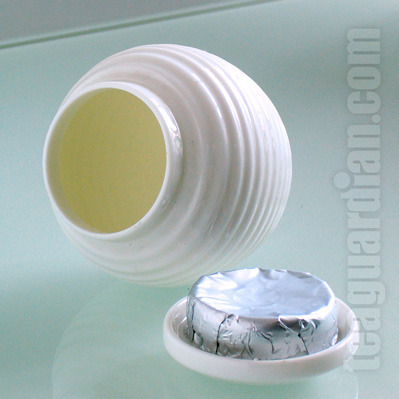
Porcelain tea caddy with lined stopper. Notice the stopper is padded and lined with aluminium foil
Porcelain
Like glass, porcelain is an excellent insulator. Better than glass, it is opaque when it is thick enough. The lid design is often the weakest point. There are those with an inner lid of plastic to improve insulation. When in doubt, an additional bag is always ensuring.
Ceramic
Unglazed ceramic is porous. A good one, such as one made from Yixing clay with a deep lid, is suitable for maturing puers or other post-fermented teas. Its evenly distributed microscopic holes allow air ventilation in an extremely slow pace, rather like oak barrels for red wine. Make sure the clay material is properly cleaned and no smell before using. Never use detergents or other chemicals to clean a porous ceramic for food and beverages.