Dancong as a hangover tea, a special recipe
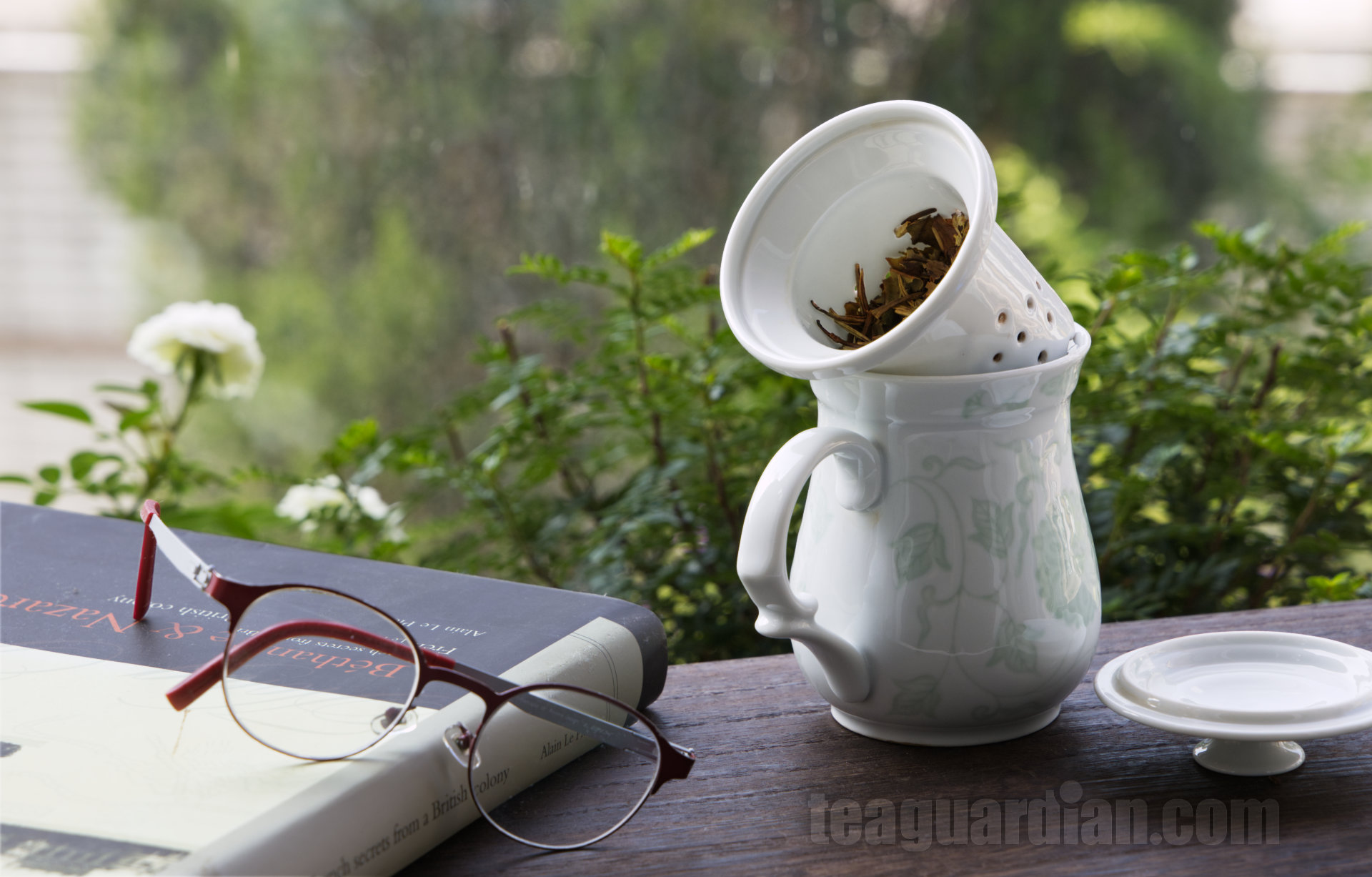
A while ago a reader asked me to write some recipes for the festivals involving Phoenix dancongs. Rather than using this very special subcategory of oolongs in a recipe for entertaining, I think of it more as a remedy, especially in this time of the year, when the next festivals are yet to come and the winter is bitter.
Dancongs
Let’s move back one step first. Dancongs — [dahn-chawngs] literally translated as single bushes, is a group of unique style oolongs that are ancient in terms of both processing method and cultivars in the Fenghuang (Phoenix) area in Guangdong — are themselves great teas for entertaining, or pacifying, depending on how you present and manifest them. Their complex and varied characteristics can bring great experiences just purely in themselves.
They are great remedies too.
The trauma of seeing hell on Earth
Many years ago, when I was still operating brick and mortar shops, a small group of old customers came in our main shop tea bar, looking tired, sick and depressed. It was my turn to be tending that afternoon, so this is first hand experience.
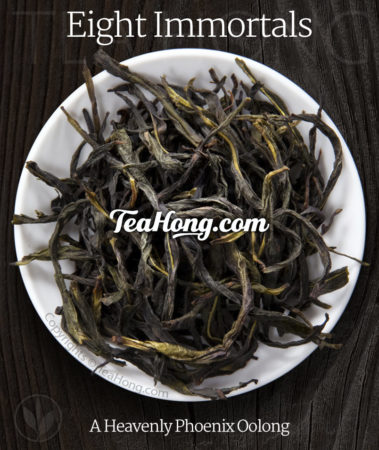
They said they had just returned from a trip to investigate the situation in the “AIDS Village” in China, and then went on to describe the horrific conditions in which the victims were living. I wouldn’t go into details, but it was hellish. A big guy said he seemed to have contracted a flu or something. His eyebags looked really dark. His face swollen. I prepared for him especially a few slightly stronger rounds of Eight Immortals. When they finished pouring out their stories and getting ready to go home, the big guy thanked me for making him feel okay again. As a tea man, I just did what I could do.
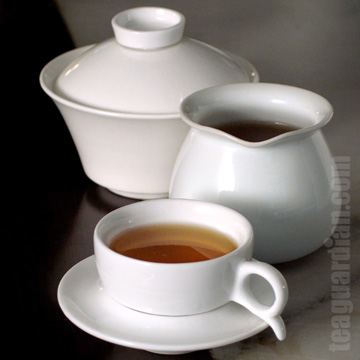
A pinch of caffeine, theanine and floral aroma do help to change the chemistry in the nervous system to bring about a bit of calmness. However, there is something else unique in Phoenix dancong oolongs that really does the trick.
I have drunk a lot of different teas, repeatedly for decades now and there is not a group of teas that can be as good in helping to lower that drag of heaviness a cold or flu brings. I can find no studies on this topic but empirically one can experience the difference.
For those who understands a bit of TCM concepts, dancongs are particularly helpful amongst teas in helping to drive the “humid evil” in the deranged “qi” of the body. The prevail of humid evil can manifest as symptoms of colds and flus.
Not sure whether it’s that unique group of cultivars, the special processing style, the growth environment, or the combination of all these, there is something special in dancongs that gives not only their unique taste characters, but also this supplementary benefit.
Now, let start to talk about this “hangover tea”.
Hangover tea recipe
( also for colds and flus, and head-wind type headaches )
- Ginger 15g
- Chan pei 1 whole
- Phoenix dancong tea 7 g
- Water 250ml (after boiling)
- Dark raw sugar 3 teaspoonfuls (Must not use yellow sugar or white sugar)
I will explain about the ingredients later below but let’s go through the simple process first.
- Thinly slice the ginger
- Wash and tear the chan pei into small pieces. Scissor it if needed
- Boil them in water for 10 to 15 min, in low heat
- Use the water to infuse your tea for 8 min, preferably in a thick ceramic vessel with a similar net capacity of 250 ml
- Put the sugar in a serving cup. Decant the infusion into the cup. Stir to mix the sugar and enjoy it while hot.
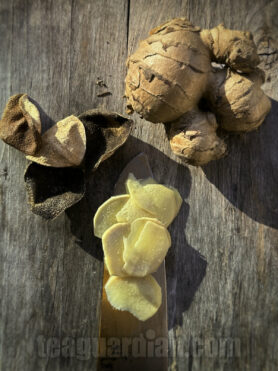
Maybe it was the weather, maybe it was my age, I have experienced a couple episodes of mild headaches this winter. Especially the morning after a bit of alcohol the previous night, or when the temperature drops suddenly.
I could self-diagnose in TCM term that “wind” was trapped in my head and if it was not dissipated, it would prevent the circulations of various energies and other ailments would grow and persist. So I thought of the ancient recipe with Wuyi oolong and ginger (as described in this recipe here), but maximise the effect with Phoenix instead and add chan pei for its supplementary benefits.
This works very effectively for me. I hope it will for you.
Let’s now look at what cha pei is.
Chan pei — aged peel
Chan pei ( 陳皮 pinyin: chen-pi ) is a staple in both the traditional medicine herb repertoire and Cantonese cuisine seasoning. The term literally translates as aged peel, referring to the peel of a particular mandarin orange local in the Xinhui county in Guangdong. It has a taste and aroma quite different from other citrus peels, especially when properly aged.
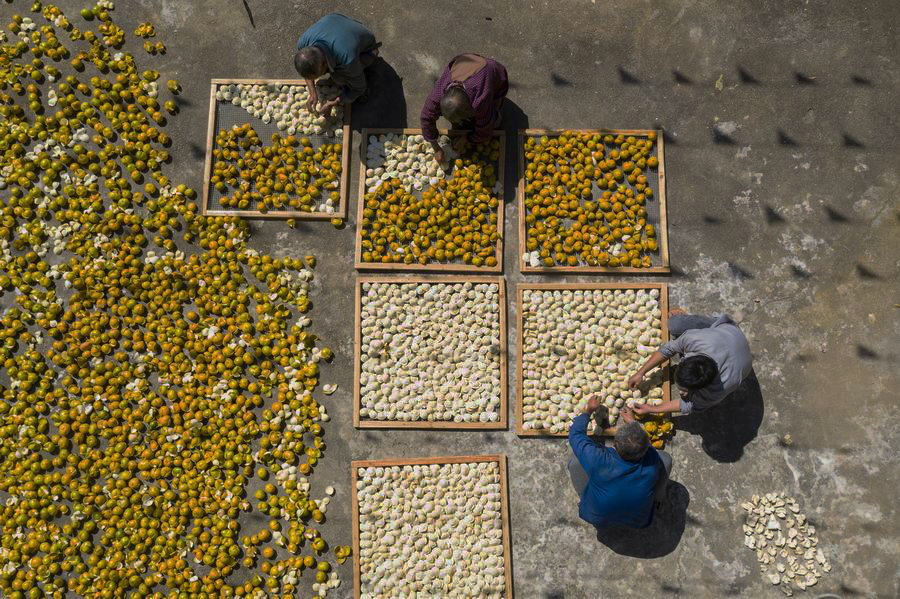
According to TCM concepts, chan pi regulates the qi, fortifies the spleen ( meaning absorption and utilisation of nutrients ), targets the ‘humid evil’ and dissipates unneeded mucous.
Fresh citrus as alternatives
If however, a genuine one is not accessible where you are at, please use the zest of a whole orange or large lemon, or any other citrus which peel is highly aromatic.
When such a substitute is used, please boil the ginger for 7 to 10 min before adding the zest to boil for another 3 to 5 min, depending on how fine you make the zest.
TCM concept in this recipe
Chan pei is often coupled with ginger in various recipes and prescriptions.
According to TCM concepts, fresh ginger helps to free congested evils, warms the core and slows coughing.
To me, these are all great supplementary forces with the effects of dancongs.
Since the symptoms I have had are not very serious, one dose is enough for me. If you are using the recipe for a more serious headache or other forms of “head-wind”, please do not increase the proportion of the ingredients, but to have patience to apply another dose after 5 hours.
Disclaimer: this is not a medical advice, but rather a sharing of personal experience. If you are having a health issue, please seek professional medical help.