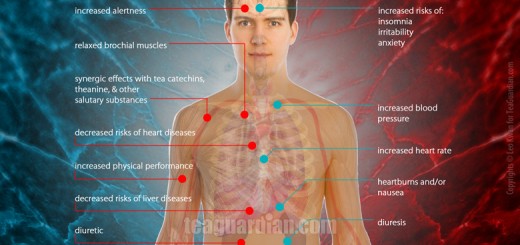
TCM & Your Physiology
 The TCM nature of teas

There is a complex system of describing the TCM nature of a given herb or food ingredient, pertaining to its effects on the energy matrix of the human body. Readers who are interested in this subject matter may read a little more in the recommended links about TCM. More details for general reading in the English language can be found in the bibliography of this site. However, since we rely most of our understanding from Chinese sources and from personal contacts, we believe there are a lot more English titles available than we have listed.
We have been very general in describing the teas’ TCM nature just with the brief concept of cooling and warm in this site, which we think is most critical in making choices to suit the occasion and body type.
For those with further interest, it is important to note that the differences in the TCM nature of the great varieties of tea popularly used today need much more work to be comprehensive. We have relied on whatever is available and supplemented our observation and experiences in completing our description of particular selections.
Cold, Cooling and Warm
These words, when used in TCM context, do not pertain to the temperature of the beverage but rather the medicinal properties.
As the reader may deduct according to the logic presented so far, a tea that is cooling tones down the Heat condition of the drinker and one that is warm reduces the Cold condition.
Pathogenic Influences
Another concept that we mention in this site is dampness. In TCM understanding, illness is caused by pathogenic influences from either the environment or within the patient. Dampness is one of such influences. It is most related with tea consumption. We are trying to explain it simply here under:
Dampness (aka dampness evil, or dampness toxins, i.e. shī, or shī xié)
Dampness is an influence that can come into effect from either externally from the environment or from within the patient’s system. It generally blocks the normal circulation of qi, and thus may cause a varieties of physiological upsets defined with the “evil” element, e.g. damp heat (shi re), cold dampness (han shi), wind dampness (feng shi), damp blockage (shi zu), damp numbness (shi bi) etc. In TCM concept, the health of a person relies on effective circulation of qi whether the person is healthy or having to combat illness. Dampness, which is heavy, viscous and thus sluggish, causes the accumulation of various other toxins or evils, such as wind, heat, etc. This further makes dissipating the evils more difficult, escalating the negative effects and blocking the reach of remedial energy or medicine to the core of the problem. This may sound abstract to the modern mind, but it is perfectly logical in the TCM set of concepts. The situation may be manifested into symptoms such as influenza, fever, recurring cold, heightened allergy, congestion, sore eyes, chest pressure, swollen joints, puffiness, bloating, fatigue, or as insignificant sounding as bad breath.
Rather than dealing with the individual symptoms, the usual TCM approach is to focus in dissipating the original influence that causes the upsets. TCM doctors believe that only when circulation of qi is established, remedial efforts can be effective. A basic strategy is to target the excretion of dampness through planned urination or sweating, which they call ‘exosmosis of dampness’ (shen shi).
While the modern concept of diuretic means causing to urinate, when a patient can simply be losing fluid, shen shi is a process where the evils accompanying the dampness are expelled from where they reside in the patient’s systems.
Minimizing the accumulation of dampness, and such similar ‘evil’ influences, is crucial for other remedial efforts, such as the effective substances of an herbal formula, to be brought to the affected organs or system for supporting the body’s own cure mechanisms. Such is a basic in TCM strategy.
In the context of this site, a smart selection and use of tea facilitate the expel of dampness, while careless use when coupled with unfortunate coincidence, may cause the accumulation of it.