Home › Dialogues › Questions › When a sheng puer has matured, is it still a sheng cha? › Re: When a sheng puer has matured, is it still a sheng cha?
 Leo
LeoThis is a great question. As some of you have already pointed out, as a shengcha pu’er comes into contact with the elements and begin to go through slowly the process of post-fermentation, it gradually turns into a dark tea, in the same category as shu cha pu’er. As to at which point it is a dark tea, initially I have wanted to work with scientists or perhaps if there are already existing datas, to come up with a definition. However, I do have some other things to ponder about too and would like to give a definition that covers a few perspectives.
Do remember that though, the post-fermentation process with which each batch of shengcha — be it in compressed forms or loose leaves — transforms, is very likely to differ dramatically to another. This, plus the different nature of the original leaves, is going to yield extremely varied final chemistry of the tealeaves.
The Taiwan study which datas I have quoted in this article: https://www.teaguardian.com/tea-health/puer-health-sheng-cha-or-shu-cha-1.html, reflects only a small fraction of the huge variety of products labelled as pu’er in the market. However, it does give a general idea as to the gradual change of chemistry as the tea slowly darkens.
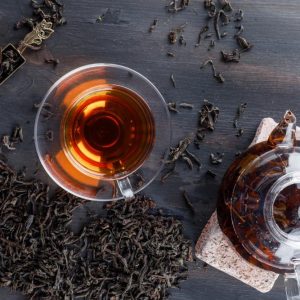
It would be a bit irresponsible not to give a temporary solid answer to Sophie’s question, so I’ll say from a user’s point of view in judging whether a shengcha is TCM a bit milder. Not by the leaf colour, esp when it’s a compressed form. The infusion colour is a bit more reliable. Do a 3g to 150 ml 5-minute infusion test. The taste should be sweet, the colour should be very dark with refractions showing colours from deep brown to deep red. This is of course for tasting test; you can adjust the concentration in daily consumption.